
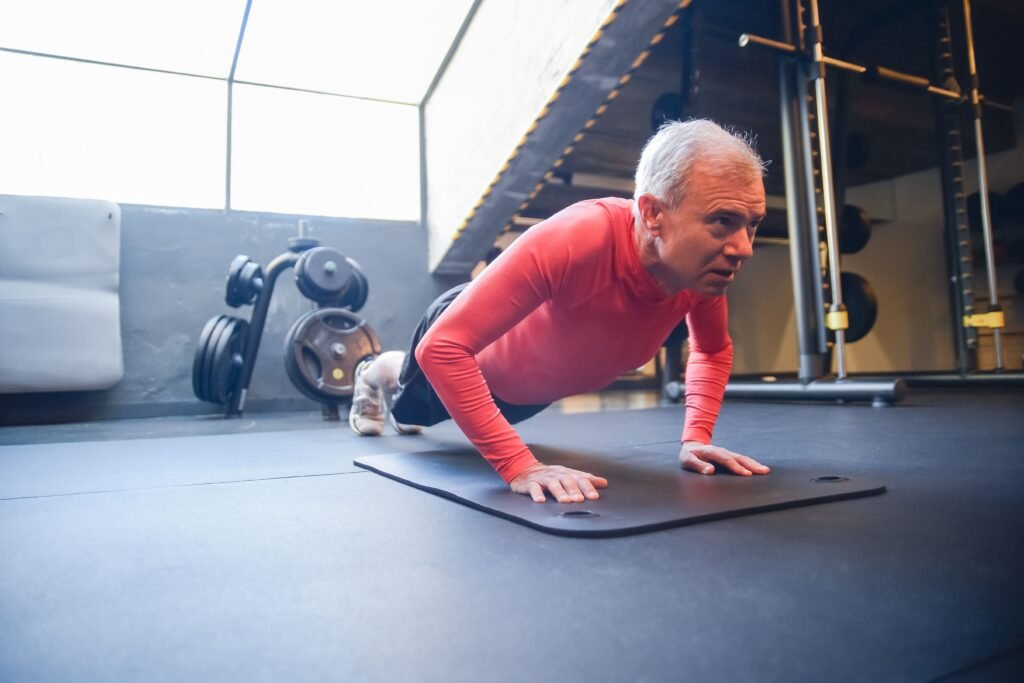
Functional fitness for aging focuses on movements that help older adults handle everyday activities with greater strength, balance, and confidence. Unlike training designed mainly for appearance or athletic performance, functional fitness exercises for seniors are built around practical movement patterns such as standing, walking, reaching, lifting, carrying, and climbing stairs. This approach matters because physical ability can change with age, affecting independence and quality of life. Regular movement can help maintain muscle strength, coordination, mobility, and balance. Strength training for older adults also provides an important foundation for staying active. Functional fitness is not a competitive sport with teams or medals. It is a practical form of exercise that supports healthy movement throughout later life.
What Functional Fitness Means for Older Adults
Functional fitness is based on exercises that resemble movements people use in daily life. Sitting down and standing up from a chair, carrying groceries, reaching for an object, or stepping onto a curb all require coordinated movement. Functional training aims to make those actions easier and more controlled.
The focus is usually on several areas of physical fitness. Strength helps with lifting and carrying. Balance supports safer movement. Flexibility and mobility allow joints to move through useful ranges. Cardiovascular fitness helps people walk longer and recover from physical activity.
For older adults, these abilities are closely connected. A person may have strong legs but struggle with balance. Another may walk well but find it difficult to lift objects from the floor. Functional fitness brings these elements together rather than treating them as separate goals.
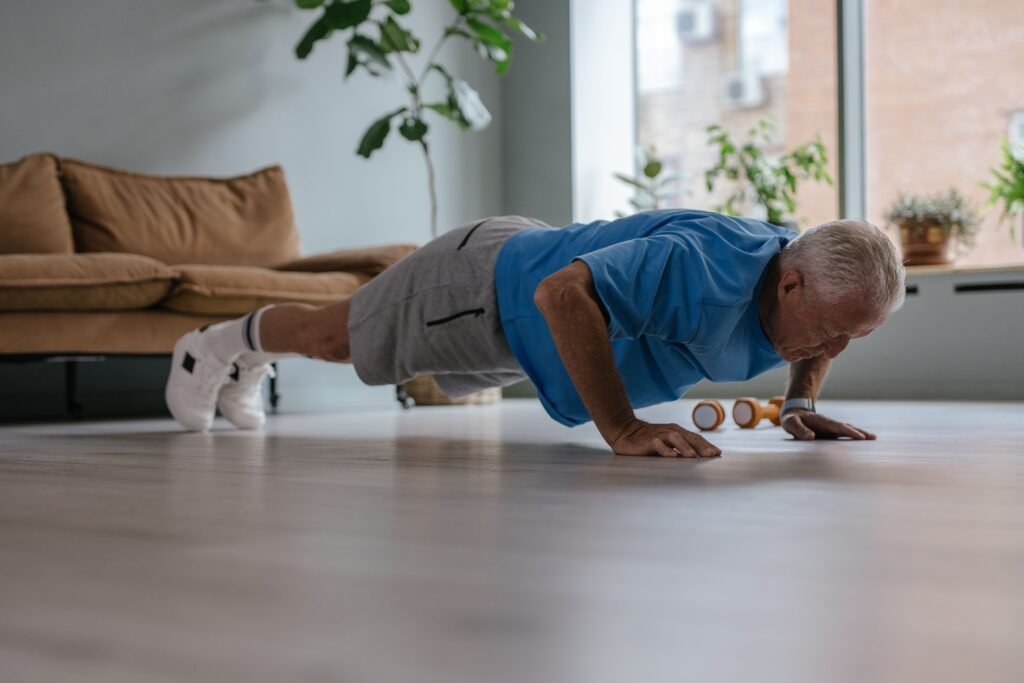
Why Functional Fitness Becomes More Important With Age
Aging naturally brings changes in muscle mass, strength, bone density, balance, and recovery. These changes do not mean that physical decline is unavoidable. Staying physically active can help older adults maintain important physical abilities for longer.
One major concern is the gradual loss of muscle strength. This can make ordinary tasks more demanding. Rising from a low chair, carrying shopping bags, or walking uphill may require more effort than they once did.
Balance is another important factor. Falls become a greater concern with age, particularly when weakness and poor coordination are combined. Functional movements can train the body to control position while moving, changing direction, or shifting weight between the legs.
The wider goal is independence. Being able to move confidently around the home and community can influence how freely a person works, travels, socializes, and manages daily responsibilities.
How Functional Fitness Developed Over Time
Functional training is not a new idea. Physical training has long included movements that prepare people for practical demands. However, the modern concept of functional fitness became more prominent as coaches, rehabilitation professionals, and fitness specialists placed greater emphasis on movement quality and everyday performance.
Traditional gym programs often separated exercises by individual muscles. Functional training placed more attention on movement patterns and coordination between different parts of the body.
As the fitness industry developed, these principles became increasingly relevant to older populations. Exercise programs began incorporating chair stands, step-ups, controlled squats, rowing movements, carries, and balance exercises. These movements could be adjusted for different abilities without requiring advanced equipment.
Today, functional fitness is used in community exercise programs, gyms, rehabilitation settings, and senior fitness classes. The methods vary, but the central idea remains the same: exercise should have a useful connection to real movement.
Functional Fitness Exercises for Seniors
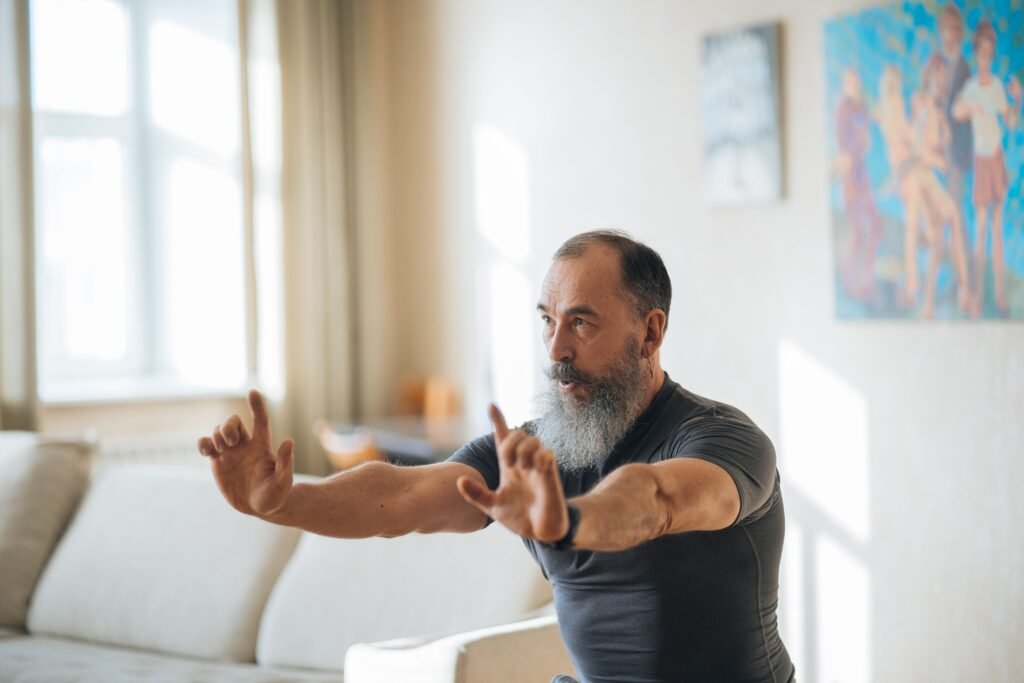
Functional fitness exercises for seniors can range from very simple movements to more demanding resistance exercises. A chair stand is one of the clearest examples because it directly resembles getting up from a seated position. Step-ups can reflect the movement required to use stairs, while controlled reaching exercises challenge coordination and stability.
Resistance exercises can also play an important role. Light dumbbells, resistance bands, machines, or body weight can provide progressive resistance. The appropriate level depends on a person’s experience, physical condition, and ability to perform the movement safely.
Walking can complement functional strength work by developing cardiovascular fitness and maintaining regular movement. Balance-focused activities can also be included, particularly when they involve controlled changes in body position.
The purpose is not to make every exercise difficult. Quality of movement is more important than simply adding resistance or repetitions. Functional training should remain practical, adaptable, and appropriate to the individual.

Strength Training and Everyday Independence
Strength training for older adults is often associated with lifting weights, but its benefits extend well beyond the gym. Stronger muscles can make common physical tasks less demanding and support better control during movement.
Lower-body strength is particularly useful for activities such as standing, walking, climbing stairs, and getting in and out of vehicles. Upper-body strength can assist with carrying, pushing, pulling, and reaching.
Functional strength also depends on coordination. Everyday movements rarely involve one muscle working in isolation. Carrying a bag while walking, for example, requires the legs, trunk, shoulders, and arms to work together.
Regular resistance training can therefore form an important part of an active aging routine. It does not have to involve heavy weights or complicated equipment. Consistent, appropriately challenging exercise is the main objective.
Safety, Progression, and Individual Differences
Functional fitness should be adapted to the person rather than forcing every older adult into the same program. Age alone does not determine fitness level. Two people of the same age may have very different strengths, mobility, balance, and exercise experience.
Beginners may start with supported movements and gradually increase difficulty. Someone with more training experience may use additional resistance or more demanding movement patterns.
Technique also matters. Exercises should be performed with controlled movement rather than rushed repetitions. Anyone returning to exercise after a long period of inactivity, or anyone managing a medical condition or injury, should discuss appropriate activity with a qualified healthcare professional.
The best functional program is one that can be performed consistently. Excessive difficulty can discourage participation, while a program that is too easy may provide little physical challenge. Finding the right level allows exercise to remain productive and sustainable.
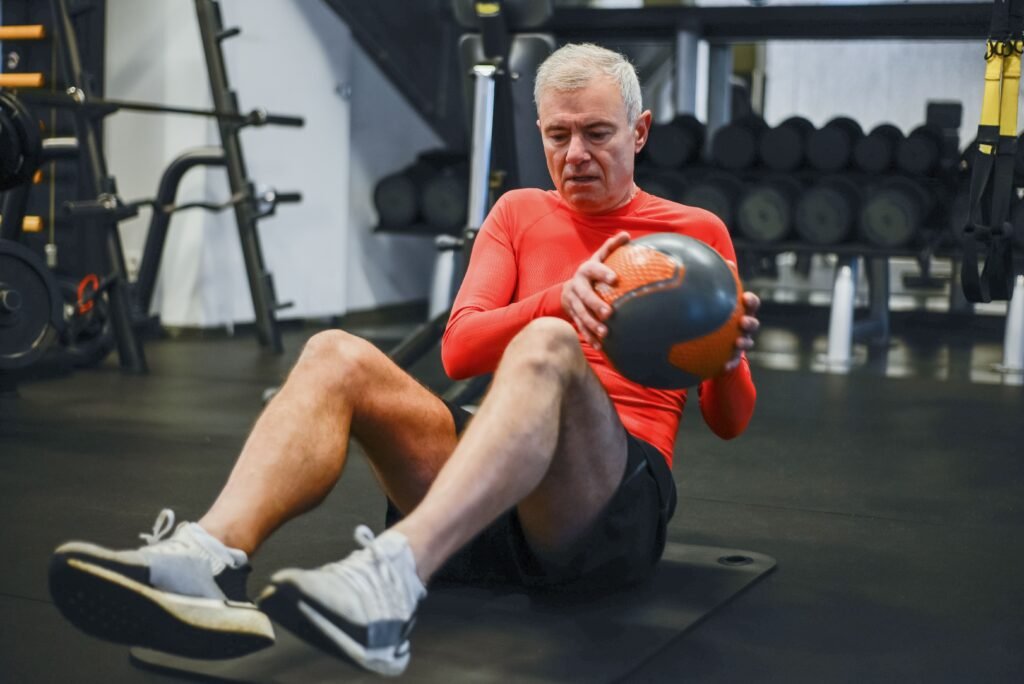
Why Functional Fitness Matters for the Future
Functional fitness for aging is ultimately about preserving the ability to live actively and independently. It does not require competitive goals, complicated workouts, or elite athletic ability. Its value comes from improving physical qualities that people use every day.
As fitness programs for older adults continue to develop, functional movement remains a practical foundation. Strength, balance, mobility, coordination, and endurance all contribute to how comfortably a person moves through daily life.
The strongest reason to take functional fitness seriously is simple. Aging changes the body, but regular physical activity can help people remain capable and engaged. For older adults, fitness is not only about exercise performance. It is also about maintaining the freedom to move, participate, and handle everyday life with confidence.
Frequently Asked Questions
What is functional fitness for aging?
Functional fitness for aging is exercise designed around everyday movements such as standing, walking, reaching, lifting, carrying, and climbing stairs. Its main purpose is to maintain strength, balance, mobility, coordination, and physical independence.
Is functional fitness suitable for beginners?
Yes. Functional fitness can be adapted for beginners using simple movements and light resistance. Exercises can become gradually more challenging as strength, balance, coordination, and confidence improve. The program should match the person’s current ability.
Can functional fitness help older adults stay independent?
Functional fitness can support independence by maintaining physical abilities needed for daily activities. Stronger legs, better balance, and improved movement control can make tasks such as walking, standing, carrying, and using stairs easier.
Does functional fitness require gym equipment?
No. Many functional exercises can be performed with body weight, a chair, or resistance bands. Dumbbells and gym machines can provide additional resistance, but equipment is not essential for every functional fitness program.
How often should older adults perform functional fitness?
The appropriate frequency depends on fitness level, recovery, and individual circumstances. A regular routine that combines strength, balance, mobility, and aerobic activity can support healthy aging. Beginners should progress gradually rather than exercising excessively.