The Abu Dhabi Grand Prix is one of the most anticipated events on the Formula 1 calendar. Held at the spectacular Yas Marina Circuit in Abu Dhabi, United Arab Emirates, the race traditionally brings the Formula 1 season to a dramatic conclusion in early December. With championship battles, high-speed action, world-class drivers, and a stunning setting, the event attracts motorsport fans from around the world.
The Abu Dhabi Grand Prix has become much more than the final race of the season. It represents the culmination of months of competition, strategic decisions, technical development and intense rivalries between Formula 1 teams. When the drivers arrive in Abu Dhabi, every championship point can carry enormous significance, particularly when the drivers’ or constructors’ titles remain undecided.
The combination of a twilight race, modern circuit facilities, and the vibrant atmosphere of Yas Island makes this event a distinctive fixture on the international sporting calendar. For fans, the season finale offers a final opportunity to watch their favourite drivers compete before attention turns towards the next Formula 1 campaign.
What Is the Abu Dhabi Grand Prix?
The Abu Dhabi Grand Prix is a Formula 1 World Championship race hosted in the UAE. It takes place at Yas Marina Circuit, a purpose-built motorsport venue located on Yas Island, a major entertainment and tourism destination.
The inaugural Abu Dhabi Grand Prix took place in 2009. Since then, the race has developed into a recognised highlight of the Formula 1 season. Its position near the end of the calendar has helped establish its reputation as a championship-defining event.
Unlike some races held during the middle of the season, the Abu Dhabi Grand Prix carries the additional importance of being the traditional season finale. Drivers arrive knowing that their final performance of the year can determine their position in the championship standings or shape the way their season is remembered.
Although the race frequently hosts the championship finale, a title is not decided at every Abu Dhabi Grand Prix. Sometimes the champions have already been confirmed, while other seasons produce a close contest that continues until the final laps.
Yas Marina Circuit: The Home of Formula 1 in Abu Dhabi
Yas Marina Circuit is one of the most recognisable venues in modern motorsport. Its waterfront setting, illuminated track and advanced facilities create a distinctive environment for the Abu Dhabi Formula 1 race.
The circuit originally featured a more complex layout when it joined the calendar in 2009. In 2021, organisers introduced significant track modifications intended to improve the flow of racing and create better overtaking opportunities.
The revised layout features a combination of long straights, heavy braking zones and flowing corners. These characteristics place considerable demands on drivers, engineers and race strategists.
Circuit Layout and Race Characteristics
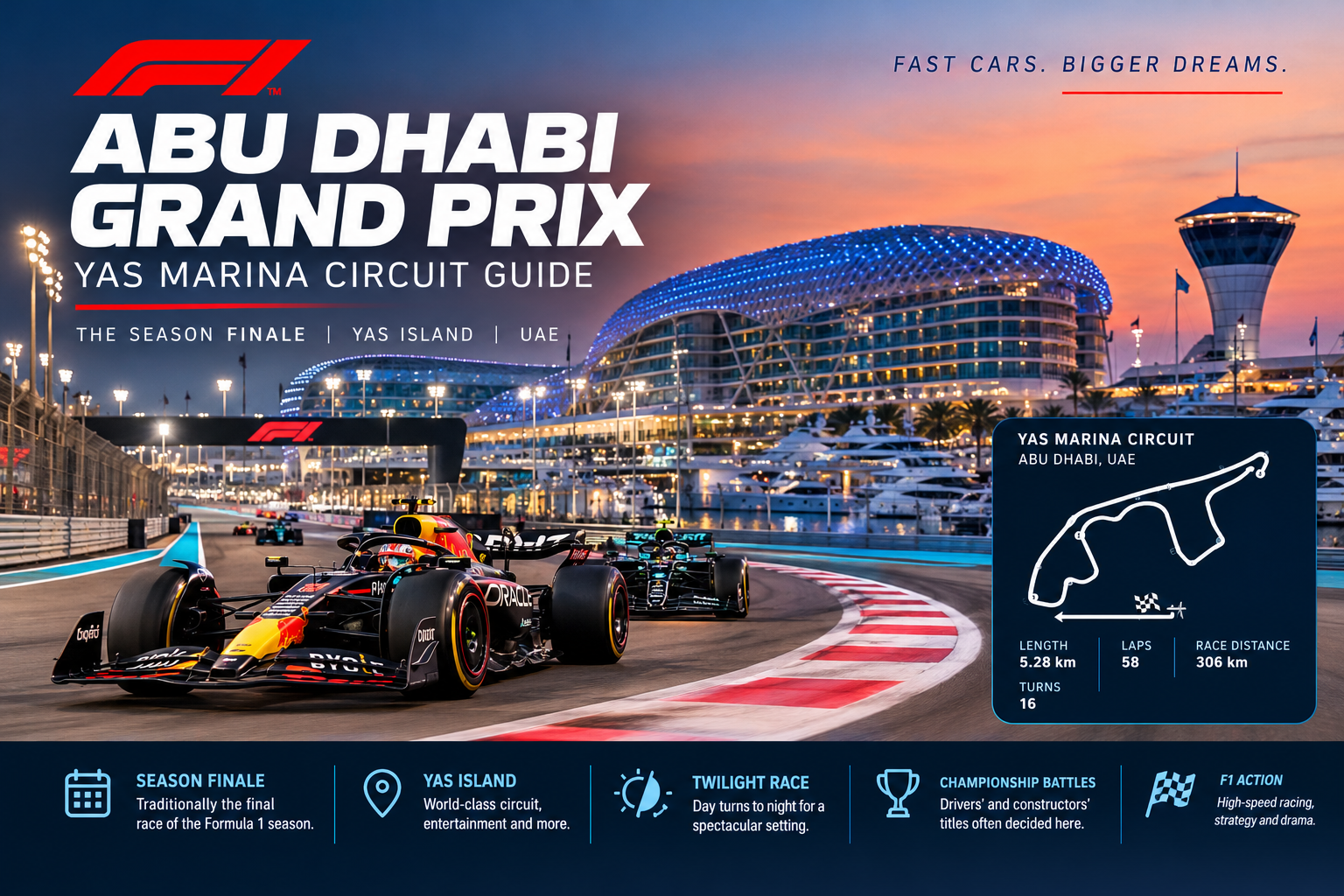
The Yas Marina Circuit is approximately 5.28 kilometres long and features 16 corners in its current configuration. The Grand Prix traditionally covers 58 laps, producing a race distance of approximately 306 kilometres.
The circuit’s long straights allow Formula 1 cars to reach high speeds, while its braking zones create opportunities for overtaking. Drivers must balance straight-line speed with sufficient aerodynamic grip to remain competitive through the slower sections.
Tyre management also plays an important role. Teams must consider degradation, track temperatures, fuel loads and the timing of pit stops when planning their race strategies.
These factors make the Abu Dhabi Grand Prix a technical challenge rather than simply a test of maximum speed.
Why the Abu Dhabi Grand Prix Starts at Twilight
One of the event’s most recognisable features is its twilight schedule. The race typically begins in the late afternoon and continues into the evening as daylight fades and the circuit lights become more prominent.
This transition creates a distinctive visual experience for spectators and television audiences. The changing light conditions also add an extra dimension to the event’s atmosphere.
For teams, however, the transition from daylight to darkness requires careful preparation. Track temperatures can change during the race, affecting tyre behaviour and grip levels. Engineers monitor these conditions to help drivers maintain consistent performance.
The twilight setting has become an important part of the Abu Dhabi Grand Prix identity, distinguishing it from many other Formula 1 races.
Abu Dhabi Grand Prix Schedule and Weekend Format
The Abu Dhabi Grand Prix normally follows the standard Formula 1 weekend format, beginning with practice sessions before qualifying and the Grand Prix itself.
The exact dates and session times vary each season. Fans should check the official Formula 1 calendar and event announcements for confirmed details about the relevant year’s race.
Friday: Free Practice
Friday generally features two practice sessions. Teams use this time to assess car balance, test tyre compounds and gather information about the circuit.
Drivers work with engineers to identify improvements in braking, cornering and straight-line performance. The collected data helps teams prepare for qualifying and the race.
Saturday: Final Practice and Qualifying
Saturday typically begins with a final practice session, followed by qualifying.
Qualifying determines the starting grid for the Grand Prix. Drivers compete to set the fastest possible lap, with small differences in timing often separating several positions.
A strong qualifying performance can be especially valuable at Yas Marina because track position influences race strategy and the ability to control the opening stages.
Sunday: The Abu Dhabi Grand Prix
Sunday is traditionally race day. Drivers line up on the grid before completing the formation lap and starting the final Grand Prix of the season.
Pit-stop timing, tyre selection, safety-car periods and race pace can all influence the result. Teams must remain flexible because unexpected incidents can change the competitive picture within seconds.
For championship contenders, the final race also requires a balance between attacking for victory and managing the points needed to secure the title.
Championship Battles and Memorable Moments
The Abu Dhabi Grand Prix has developed a reputation for producing unforgettable Formula 1 moments. Its position at the end of the season means that the race can become the final chapter of a year-long championship contest.
The 2010 race provided an early example of the venue’s importance. Sebastian Vettel won the Grand Prix and secured his first Formula 1 drivers’ championship, becoming the youngest world champion at that time.
The 2016 edition also attracted major attention. Nico Rosberg finished second behind Lewis Hamilton, which was enough to secure the drivers’ title and complete a memorable championship battle.
However, the 2021 Abu Dhabi Grand Prix remains one of the most discussed races in modern Formula 1 history. Max Verstappen and Lewis Hamilton arrived at the finale level on points. Verstappen won the race and the championship after a late safety-car period and a controversial restart sequence. The race director’s handling of the safety-car procedure prompted extensive debate and an official FIA review.
These moments illustrate why the Abu Dhabi season finale attracts such global attention. The result can influence sporting history, driver legacies and the way fans remember an entire championship.
Drivers and Teams to Watch
The competitive picture changes from season to season, so the leading contenders for the Abu Dhabi Grand Prix depend on current form, car performance and the championship standings.
Drivers’ Championship Contenders
Drivers fighting for the world title face a particularly demanding challenge. They must combine speed with consistency while avoiding costly mistakes.
A championship leader may prioritise a controlled finish if the points situation favours a conservative approach. A rival who needs a victory may be more willing to take strategic risks.
This difference in objectives can make the final race especially compelling.
Constructors’ Championship Battle
The constructors’ championship is another important storyline. Formula 1 teams earn points through the results of both drivers, meaning every finishing position can affect the final standings.
The championship influences team prestige, commercial value and the distribution of Formula 1 prize money. As a result, teams may continue fighting for valuable points even after the drivers’ title has been decided.
Strategy and Pit-Stop Decisions
Race strategy is often central to success at Yas Marina. Teams must decide when to change tyres, how long to extend each stint and whether to respond to a rival’s pit stop.
An early stop can provide an opportunity to gain positions through an undercut, while staying on track longer may offer a strategic advantage later.
Safety-car periods can also change the calculations. A well-timed pit stop may create an opportunity, but a poorly timed decision can cost several positions.
What Makes the Abu Dhabi Grand Prix Special?
Several features distinguish the Abu Dhabi Grand Prix from other Formula 1 events.
First, its season-ending position creates natural sporting drama. Fans can follow the final championship calculations and see how the year’s biggest rivalries conclude.
Second, Yas Marina Circuit offers a distinctive combination of modern architecture, waterfront scenery and night-time illumination. The event’s visual presentation has helped establish it as a major international sporting spectacle.
Third, Yas Island provides visitors with entertainment options beyond the race itself. Restaurants, hotels, leisure attractions and family activities contribute to the wider Grand Prix experience.
Finally, the event brings together international motorsport audiences, celebrities, teams and sponsors. This combination makes the Abu Dhabi Grand Prix a major fixture for both sport and tourism in the UAE.
How to Watch the Abu Dhabi Grand Prix
Fans can usually follow the race through official Formula 1 broadcasting partners, regional sports broadcasters and authorised streaming services. Availability varies by country, so viewers should check the broadcasters operating in their region.
The official Formula 1 website and app provide race schedules, qualifying results, championship standings, driver information and live timing options where available.
Fans in Pakistan should check local sports television listings and authorised streaming platforms closer to race weekend to confirm coverage, session times and any subscription requirements.
For spectators attending in person, the official event website is the best source for ticket information, entry requirements, transport arrangements and circuit access updates.
Abu Dhabi Grand Prix: What to Expect from the Season Finale
The Abu Dhabi Grand Prix combines competitive motorsport with a high-profile international event atmosphere. Its circuit rewards precision, tyre management and strategic thinking, while its position at the end of the season gives every result additional context.
A close championship battle can turn the final race into a defining sporting moment. Even when the titles have already been decided, teams continue competing for race victories, podium finishes and valuable constructors’ championship points.
As Formula 1 continues to evolve, Yas Marina Circuit remains an important part of the championship calendar. Its twilight setting, technical layout and history of dramatic finales ensure that the Abu Dhabi Grand Prix remains a race worth following.
For motorsport fans, the final weekend offers one last opportunity to see the season’s leading drivers compete before the championship resets and preparations begin for the next campaign.
Frequently Asked Questions
1. Where is the Abu Dhabi Grand Prix held?
The Abu Dhabi Grand Prix takes place at Yas Marina Circuit on Yas Island in Abu Dhabi, United Arab Emirates.
2. When does the Abu Dhabi Grand Prix take place?
The race traditionally takes place in late November or early December, often serving as the final round of the Formula 1 season. Exact dates depend on the annual calendar.
3. How many laps are in the Abu Dhabi Grand Prix?
The Grand Prix normally consists of 58 laps of the 5.28-kilometre Yas Marina Circuit, covering approximately 306 kilometres.
4. Why is the Abu Dhabi Grand Prix important?
It traditionally concludes the Formula 1 season and can decide the drivers’ or constructors’ championship when the standings remain close. It also provides a final opportunity for teams to compete for race results and championship points.
5. How can fans watch the Abu Dhabi Grand Prix in Pakistan?
Fans can check authorised Formula 1 broadcasters, regional sports channels and licensed streaming services available in Pakistan. Official Formula 1 channels also provide schedules, results, and other race information.