Functional fitness focuses on movements that help you perform everyday activities with greater strength, balance, coordination, and control. Instead of training only for appearance or a specific sport, functional workouts prepare the body for tasks such as climbing stairs, carrying groceries, lifting boxes, getting up from a chair, or playing with children.
The idea is simple: fitness should make daily life easier. A well-rounded functional fitness routine can combine strength exercises, mobility work, balance drills, and cardiovascular activity. It does not always require expensive equipment or a gym membership. Many useful exercises can be performed at home with body weight, resistance bands, dumbbells, or other simple equipment.
What Is Functional Fitness?
Functional fitness is a training approach based on movements that have practical value in everyday life. These exercises often involve several muscle groups working together rather than isolating one muscle at a time.
Common functional movements include:
- Squatting
- Bending and hinging at the hips
- Pushing
- Pulling
- Carrying
- Rotating
- Stepping
- Reaching
- Getting up and down from the floor
For example, a squat is not just a gym exercise. The same movement pattern is used when sitting down on a chair or standing up. A carrying exercise can prepare the body for holding shopping bags, luggage, or household items.
Functional fitness therefore connects exercise with real-world movement.
Why Functional Fitness Matters in Everyday Life
Daily activities can place different demands on the body. You may need to lift something from the floor in the morning, walk several thousand steps during the day, carry groceries home, climb stairs, and spend time standing or sitting.
Regular functional training can help build the physical qualities needed for these activities.
1. It Builds Practical Strength
Strength is useful beyond the gym. Stronger legs can make stairs and standing easier, while stronger upper-body muscles can help with carrying and pushing tasks.
Exercises such as squats, lunges, rows, push-ups, and carries train multiple muscle groups together. This can make strength more transferable to everyday movements.
2. It Supports Balance and Stability
Balance becomes important whenever you walk on uneven surfaces, step over an object, climb stairs, or change direction quickly.
Single-leg exercises, controlled step-ups, and balance drills can challenge the muscles involved in stability. Better control can also help you feel more confident during everyday movement.
3. It Improves Mobility
Strength alone is not enough if your joints cannot move comfortably through useful ranges of motion.
Functional training can include mobility exercises for the hips, shoulders, ankles, and spine. Combining mobility with strength can help you move more efficiently during normal activities.
4. It Develops Coordination
Everyday movements rarely involve only one joint or muscle. Picking up an object, reaching for a shelf, or carrying something while walking requires coordination.
Functional exercises often combine different movement patterns. This gives the body opportunities to practice controlling several actions at once.
The Main Movement Patterns to Train
A balanced functional fitness program should include several basic movement patterns.
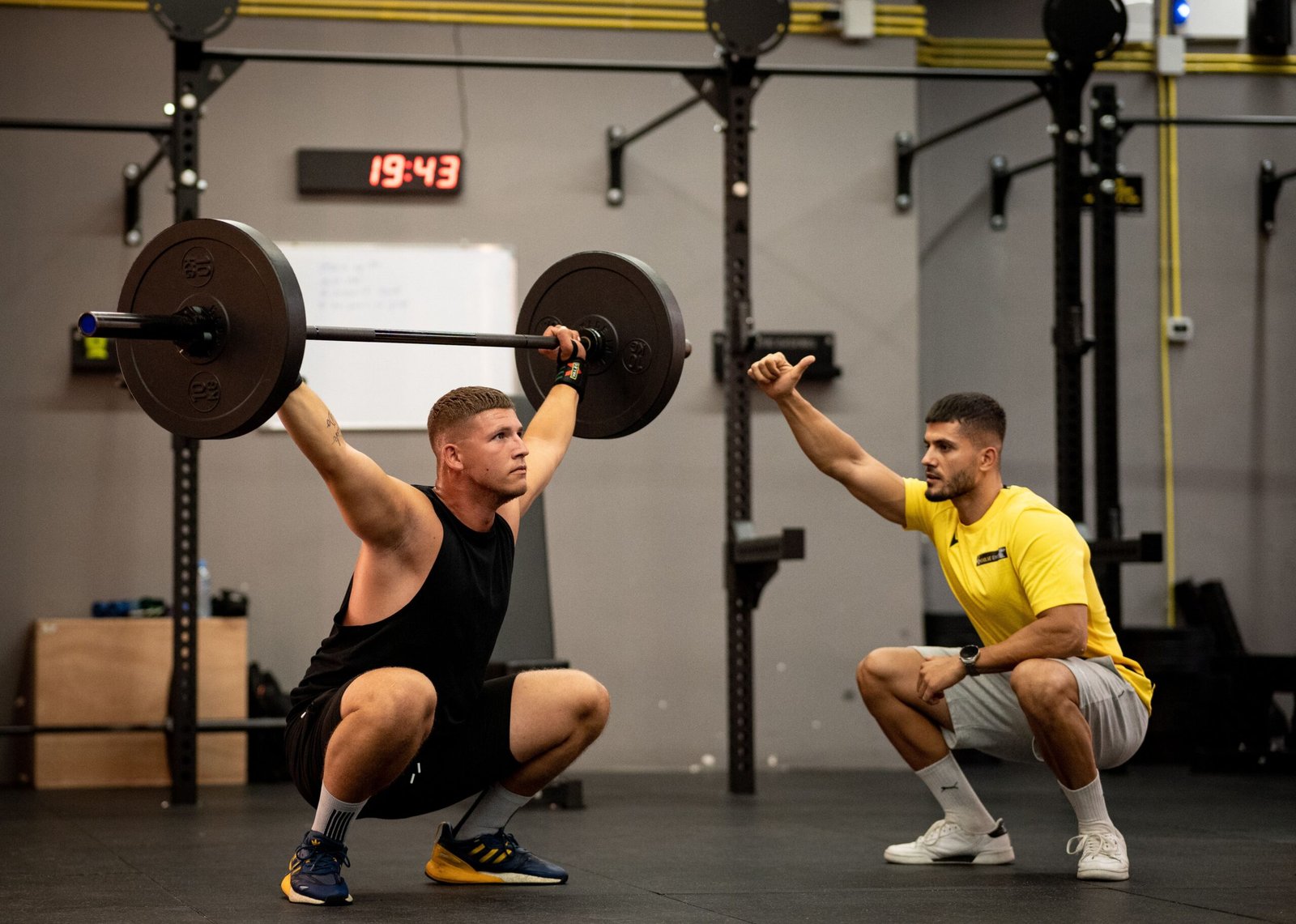
Squatting
Squatting is involved in sitting, standing, picking up objects, and many other daily movements.
Begin with bodyweight squats. Stand with your feet around shoulder-width apart, keep your chest comfortable and upright, and lower your body under control. Push through your feet to return to the starting position.
As you become stronger, you can add resistance with dumbbells or another suitable weight.
Hip Hinging
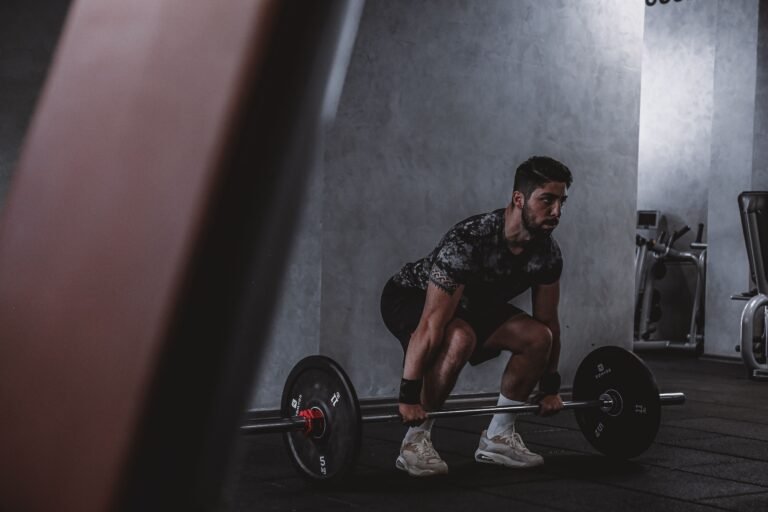
The hip hinge teaches you to bend from the hips while maintaining control of your torso. It is useful for movements such as picking something up from the floor.
Exercises such as Romanian deadlifts can develop this pattern. Beginners can practice the movement without weights before adding resistance.
Pushing
Pushing movements are common in everyday activities, from opening a heavy door to moving an object.
Push-ups are a simple functional exercise. Beginners can perform them against a wall, elevated surface, or sturdy bench before progressing to floor push-ups.
Pulling
Pulling strength is useful when opening doors, moving objects, or handling equipment.
Rows are one of the most practical pulling exercises. Resistance bands, cable machines, or dumbbells can all be used depending on your available equipment.
Carrying
Carrying may be one of the most directly useful forms of functional training.
Farmer’s carries involve walking while holding weights at your sides. They challenge the grip, arms, shoulders, trunk, and legs while requiring you to maintain good posture.
Even a short carrying exercise can make a workout feel closely connected to real-life movement.
Stepping and Lunging
Walking up stairs, stepping over objects, and getting into different positions all require single-leg strength and control.
Lunges and step-ups can train these abilities. Start with a comfortable range of motion and use support if needed.
Functional Exercises You Can Do at Home
You do not need a full home gym to train functionally. A simple routine could include:
Bodyweight squats: 2–3 sets of 8–15 repetitions
Wall or incline push-ups: 2–3 sets of 8–15 repetitions
Glute bridges: 2–3 sets of 10–15 repetitions
Resistance-band rows: 2–3 sets of 8–15 repetitions
Step-ups: 2–3 sets of 8–12 repetitions per leg
Farmer’s carries: 3 short walks of around 20–40 seconds
Bird dogs: 2–3 sets of 6–10 controlled repetitions per side
The exact number of repetitions is less important than maintaining controlled movement and choosing a level of resistance that suits your current ability.
How to Build a Functional Fitness Routine
A useful functional workout does not need to be complicated.
Start with a short warm-up. Walking, gentle mobility movements, and controlled bodyweight exercises can help prepare you for the session.
Next, choose exercises that cover several movement patterns. For example, you might combine a squat, push, pull, hinge, carry, and core exercise.
Finish with light movement or mobility work if it feels comfortable.
For beginners, two or three functional strength sessions per week can provide a practical starting point. Other days can include walking, cycling, swimming, recreational activities, or rest depending on your overall routine.
The goal is consistency rather than trying to make every workout extremely difficult.
Functional Fitness and Core Strength
Core training is an important part of functional fitness because the trunk helps transfer force between the upper and lower body.
However, functional core training does not have to mean doing hundreds of crunches.
Exercises such as planks, dead bugs, bird dogs, carries, and controlled rotational movements can challenge the trunk in different ways.
The objective is to develop control and stability while the rest of the body moves.
For example, carrying a weight in one hand requires the trunk to resist unwanted movement. This makes the exercise relevant to situations where you may carry a bag on one side of your body.
How Functional Fitness Can Fit Into a Busy Schedule
One advantage of functional training is that sessions can be relatively simple.
If you have only 20 minutes, choose four or five exercises and perform them in a controlled circuit. For example:
- Squats
- Incline push-ups
- Resistance-band rows
- Step-ups
- Farmer’s carries
You can perform each movement for a manageable number of repetitions or for a short period before moving to the next exercise.
Another option is to add movement throughout the day. Take the stairs when practical, walk during breaks, carry appropriate household items, or perform a few mobility exercises after long periods of sitting.
These small habits do not replace structured exercise, but they can complement it.
Functional Fitness for Different Ages
Functional fitness can be adapted for different ages and fitness levels.
Younger adults may use heavier resistance, faster movements, or more challenging variations. Adults with limited training experience can begin with basic bodyweight exercises and gradually increase difficulty.
For older adults, functional training can be especially relevant because daily independence often depends on the ability to stand, walk, climb steps, carry objects, and maintain balance.
The exercises should match the person’s current ability rather than following a one-size-fits-all program.
Anyone returning to exercise after a long break, injury, or significant health concern should consider getting appropriate professional guidance before starting a demanding routine.
Common Mistakes to Avoid
Functional fitness is practical, but it still requires good training habits.
Doing Too Much Too Soon
Adding heavy weights or difficult exercises immediately can make training unnecessarily challenging. Progress gradually as your strength and movement control improve.
Focusing Only on Strength
Functional fitness is broader than lifting weights. Mobility, balance, coordination, cardiovascular fitness, and recovery also matter.
Ignoring Technique
An exercise does not become more functional simply because it is difficult. Controlled technique and appropriate resistance are more useful than chasing heavy weights.
Copying Someone Else’s Workout
Fitness levels and movement abilities vary. A routine that works well for one person may not be appropriate for another.
Expecting Quick Results
Functional fitness is about building useful physical capacity over time. Consistent training generally matters more than occasional intense workouts.
A Simple Weekly Functional Fitness Plan
A basic weekly structure could look like this:
Monday: Full-body functional strength
Tuesday: Walking or light cardiovascular activity
Wednesday: Rest or mobility work
Thursday: Full-body functional strength
Friday: Walking or recreational activity
Saturday: Optional strength, mobility, or outdoor activity
Sunday: Rest
This is only an example. Your schedule can be adjusted around work, family responsibilities, fitness level, and recovery needs.
The most effective routine is one that you can follow consistently.
Final Thoughts
Functional fitness is about making exercise useful beyond the workout itself. Squatting, hinging, pushing, pulling, carrying, stepping, and balancing are all movements that appear in everyday life.
A good functional fitness routine does not need to be complicated or expensive. Bodyweight exercises, resistance bands, dumbbells, and regular walking can provide a strong foundation.
The key is to train a variety of movements, progress gradually, and give your body enough time to recover. Over time, the goal is not simply to become better at exercising. It is to build physical abilities that support an active and independent everyday life.
FAQs
What is functional fitness?
Functional fitness is a form of exercise that focuses on movements and physical abilities used in everyday activities, such as squatting, lifting, carrying, pushing, pulling, and stepping.
Can I do functional fitness at home?
Yes. Many functional exercises require little or no equipment. Squats, push-ups, lunges, glute bridges, bird dogs, and step-ups can all be performed at home.
How often should I do functional fitness?
For many beginners, two or three strength-focused sessions per week can be a practical starting point. The schedule should also include other forms of movement and adequate recovery.
Is functional fitness good for older adults?
Functional exercises can be adapted for older adults and can focus on practical abilities such as balance, strength, mobility, and getting up from a chair. Exercise difficulty should match the individual’s ability.
Is functional fitness better than traditional weight training?
They serve different purposes. Functional training emphasizes practical movement patterns, while traditional resistance training can target specific muscles and strength goals. Combining different approaches can create a well-rounded fitness routine.