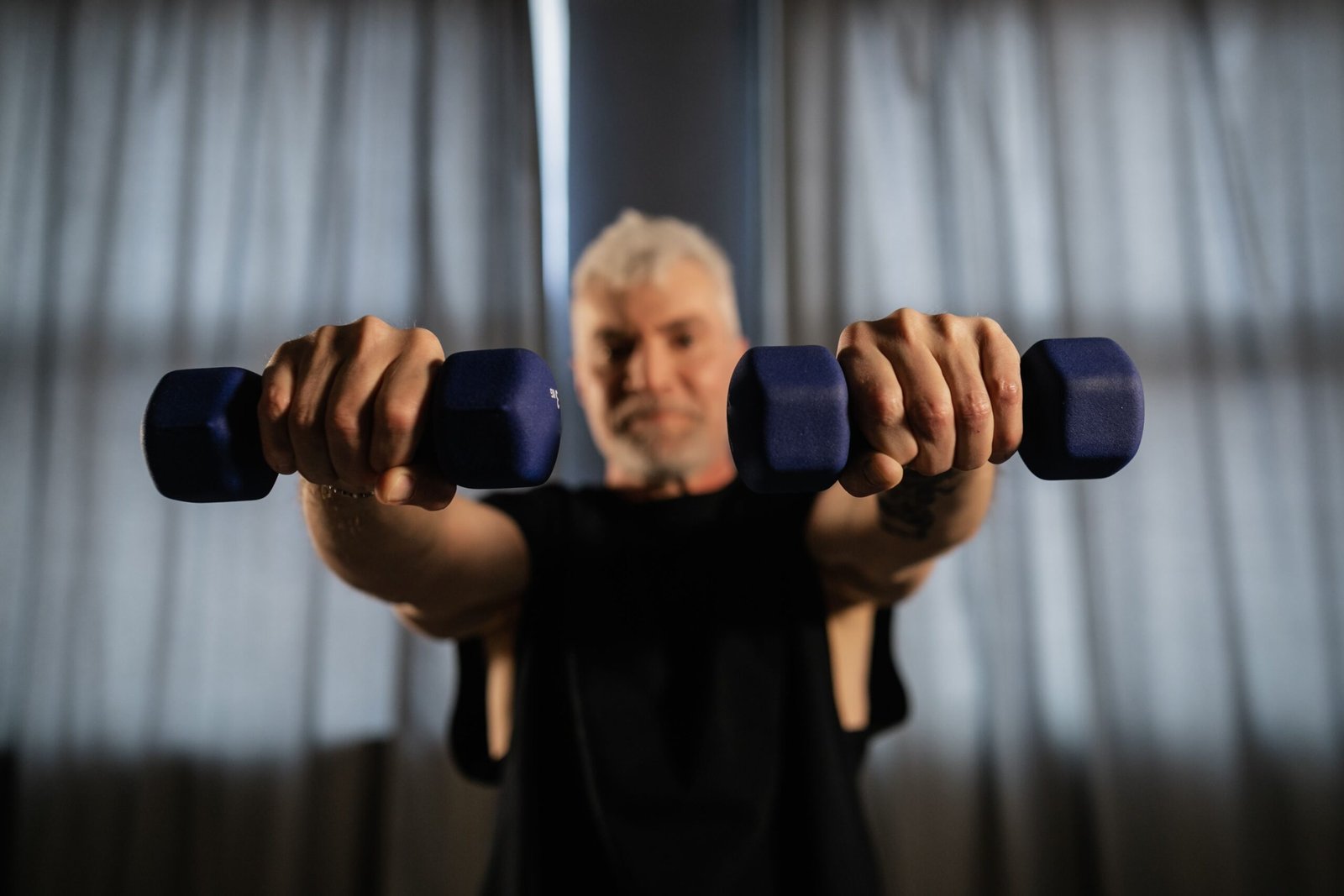
Healthy aging is not only about getting older. It is also about staying active, maintaining strength, protecting mobility, and keeping everyday movement comfortable. Regular exercise can support many parts of an active lifestyle, from walking and climbing stairs to carrying groceries and enjoying hobbies. The good news is that healthy aging does not require complicated workouts. A balanced routine can include simple exercises such as walking, strength training, balance exercises, mobility work, and low-impact cardio. The right combination can help people stay physically active as they move through their 40s, 50s, 60s, and beyond. Exercise choices may also change with age. A workout that felt comfortable years ago may need adjustments later. Instead of focusing only on intensity, a healthy-aging fitness routine can focus on consistency, movement quality, strength, balance, flexibility, and recovery.
1. Walking
Walking is one of the simplest exercises for healthy aging. It requires little equipment and can fit into almost any daily routine.
Regular walking can help people remain active without requiring a complex workout plan. A brisk walk can also provide a simple form of cardiovascular exercise.
Beginners can start with shorter walks and gradually increase their duration. Walking around a neighborhood, park, shopping area, or even indoors can add more movement to the day.
For variety, walkers can change their pace. A few faster intervals can make a regular walk more challenging while keeping the activity simple.
Walking can also be combined with other forms of exercise. For example, a weekly routine might include several walking sessions alongside strength and balance exercises.
2. Strength Training
Strength training becomes increasingly important as people get older. It can help maintain muscle strength and support everyday activities.
Strength workouts do not always require a gym. Bodyweight movements, resistance bands, dumbbells, and other simple equipment can provide different ways to train.
Common beginner-friendly movements include:
- Squats or chair squats
- Wall push-ups
- Step-ups
- Glute bridges
- Resistance-band rows
- Light dumbbell exercises
The goal is not necessarily to lift the heaviest possible weight. Instead, a sustainable routine can focus on controlled movements and gradually increasing the challenge.
Strength training can also complement walking and other forms of cardio. Together, these activities create a more balanced fitness routine.
3. Chair Squats
Chair squats are a practical exercise for people who want to work on lower-body strength. They also resemble an everyday movement: sitting down and standing up.
To perform a chair squat, stand in front of a stable chair with your feet positioned comfortably apart. Move your hips back and bend your knees as you lower yourself toward the chair. Then stand back up in a controlled way.
The chair provides a useful reference point and can make the movement easier to understand for beginners.
As strength improves, people can gradually increase repetitions or explore other squat variations.
Good technique matters more than rushing through repetitions. Keep the movement controlled and choose a range that feels comfortable.
4. Balance Exercises
Balance is another important part of healthy aging. Good balance can make everyday movement more confident and controlled.
Simple balance exercises can include:
- Standing on one leg
- Heel-to-toe walking
- Supported leg raises
- Controlled step-ups
- Side-to-side stepping
Beginners should start with support nearby, such as a sturdy countertop or stable chair. The aim is to practice controlled movement rather than immediately attempting difficult balance challenges.
Balance exercises can be included for a few minutes during a regular workout or practiced separately.
Combining balance work with strength training can create a more complete approach to maintaining physical function.
5. Mobility Exercises
Mobility exercises focus on helping the body move through comfortable ranges of motion. They can be particularly useful for people who spend long periods sitting during the day.
Simple mobility movements can include:
- Shoulder circles
- Gentle hip movements
- Ankle circles
- Thoracic rotations
- Controlled leg swings
- Gentle bodyweight movements
Mobility work can be used before exercise as part of a warm-up or after a workout as part of a cool-down.
It can also become a short daily routine. Even several minutes of movement may provide a useful break from prolonged sitting.
The emphasis should be on controlled, comfortable movement rather than forcing a joint into an extreme position.
6. Low-Impact Cardio
Low-impact cardio can provide another option for people who want cardiovascular exercise while reducing the amount of high-impact movement in their routine.
Examples include
- Brisk walking
- Cycling
- Stationary cycling
- Swimming
- Water-based exercise
- Elliptical training
The best option depends on individual preferences, fitness levels, access to equipment, and comfort.
Low-impact activities can make it easier to maintain regular exercise because they offer alternatives to activities involving repeated jumping or running.
For people returning to exercise after a long break, starting gradually can make a routine easier to maintain.
7. Step-Ups
Step-ups are a simple lower-body exercise that can be adapted to different fitness levels. The movement also resembles everyday activities such as stepping onto a curb or climbing stairs.
A low, stable step can be used to begin. Step onto the platform with control and then step back down. Alternate legs as appropriate.
The height of the step can affect the difficulty. Beginners can start with a lower platform and focus on balance and control.
Step-ups can be included in a strength workout or used as part of a functional fitness routine.
Because balance is involved, beginners should use a stable setup and avoid rushing the movement.
Creating a Healthy-Aging Workout Routine
A balanced healthy-aging routine does not need to be complicated. Instead of doing the same type of exercise every day, consider combining several forms of movement throughout the week.
A simple weekly structure could look like this:
Monday: Walking + mobility
Tuesday: Strength training
Wednesday: Walking or low-impact cardio
Thursday: Balance + mobility
Friday: Strength training
Saturday: Longer walk or recreational activity
Sunday: Light movement and recovery
This is only an example. A person’s routine can be adjusted according to their current fitness level, schedule, preferences, and goals.
The most important factor is consistency. A simple routine that someone can follow regularly may be more useful than an ambitious plan that becomes difficult to maintain.
How to Make Exercise Part of Daily Life
Healthy aging is not limited to formal workouts. Everyday movement can also contribute to an active lifestyle.
Simple habits can include taking the stairs when appropriate, walking for short errands, standing up regularly during long periods of sitting, doing household activities, gardening, or taking short movement breaks during the workday.
These activities may seem small, but they can help reduce long periods of inactivity.
People who work at a desk can also build movement into their schedule. A short walk or mobility break between tasks can provide a simple way to add activity without requiring a full workout.
The idea is to make movement a normal part of daily life rather than something reserved for the gym.
Exercise and Recovery
Recovery is an important part of a long-term fitness routine. Training every day at maximum intensity is not necessary for healthy aging.
Rest days, lighter sessions, adequate sleep, hydration, and balanced nutrition can all fit into a sustainable approach to fitness.
It is also useful to pay attention to how the body responds to exercise. Persistent pain, unusual symptoms, or a significant change in physical ability should not simply be ignored.
People with existing medical conditions, injuries, or concerns about starting a new exercise program may want to discuss suitable activity with a qualified healthcare professional.
How to Progress Safely
Progress does not always mean adding heavier weights. It can also mean improving consistency, increasing walking time, adding repetitions, improving movement control, or gradually increasing resistance.
For example, someone starting strength training might begin with a small number of repetitions and focus on technique. Over time, they could increase repetitions or resistance as appropriate.
Similarly, a person beginning a walking routine could start with shorter walks and gradually increase duration.
Small changes can make a fitness routine more sustainable. There is no need to turn every workout into a demanding session.
Why Variety Matters for Healthy Aging
A single form of exercise cannot cover every aspect of physical fitness.
Walking can provide cardiovascular activity, while strength training focuses on muscular strength. Balance exercises challenge stability, and mobility work encourages regular movement through comfortable ranges.
Combining different activities can make a routine more complete.
Variety can also make exercise more enjoyable. Someone who dislikes traditional gym workouts might prefer walking, cycling, swimming, recreational sports, or functional exercises.
Finding activities that are enjoyable can make it easier to stay active over the long term.
Final Thoughts
The best exercises for healthy aging are not necessarily the most complicated ones. Walking, strength training, balance exercises, mobility work, step-ups, and low-impact cardio can all have a place in a balanced fitness routine.
The key is to choose activities that match your current abilities and gradually build consistency. Healthy aging is a long-term process, so exercise should be sustainable rather than based on short-term intensity.
A combination of regular movement, strength, balance, mobility, cardiovascular activity, and recovery can help support an active lifestyle through different stages of adulthood.
Frequently Asked Questions
1. What are the best exercises for healthy aging?
Walking, strength training, balance exercises, mobility work, and low-impact cardio are among the most useful categories to include in a healthy-aging fitness routine.
2. Is walking enough for healthy aging?
Walking is an excellent form of regular activity, but a balanced routine can also include strength, balance, mobility, and other forms of exercise.
3. How often should older adults exercise?
Exercise frequency depends on fitness level, goals, health status, and the type of activity. A consistent weekly routine that combines different forms of movement can be a practical approach.
4. Can beginners start strength training after 50?
Yes. Beginners can start with simple movements such as chair squats, wall push-ups, resistance-band exercises, and light weights, gradually increasing the challenge as appropriate.
5. Are low-impact exercises good for healthy aging?
Low-impact activities such as walking, cycling, swimming, and water exercise can be useful options for people who prefer to limit high-impact movements.