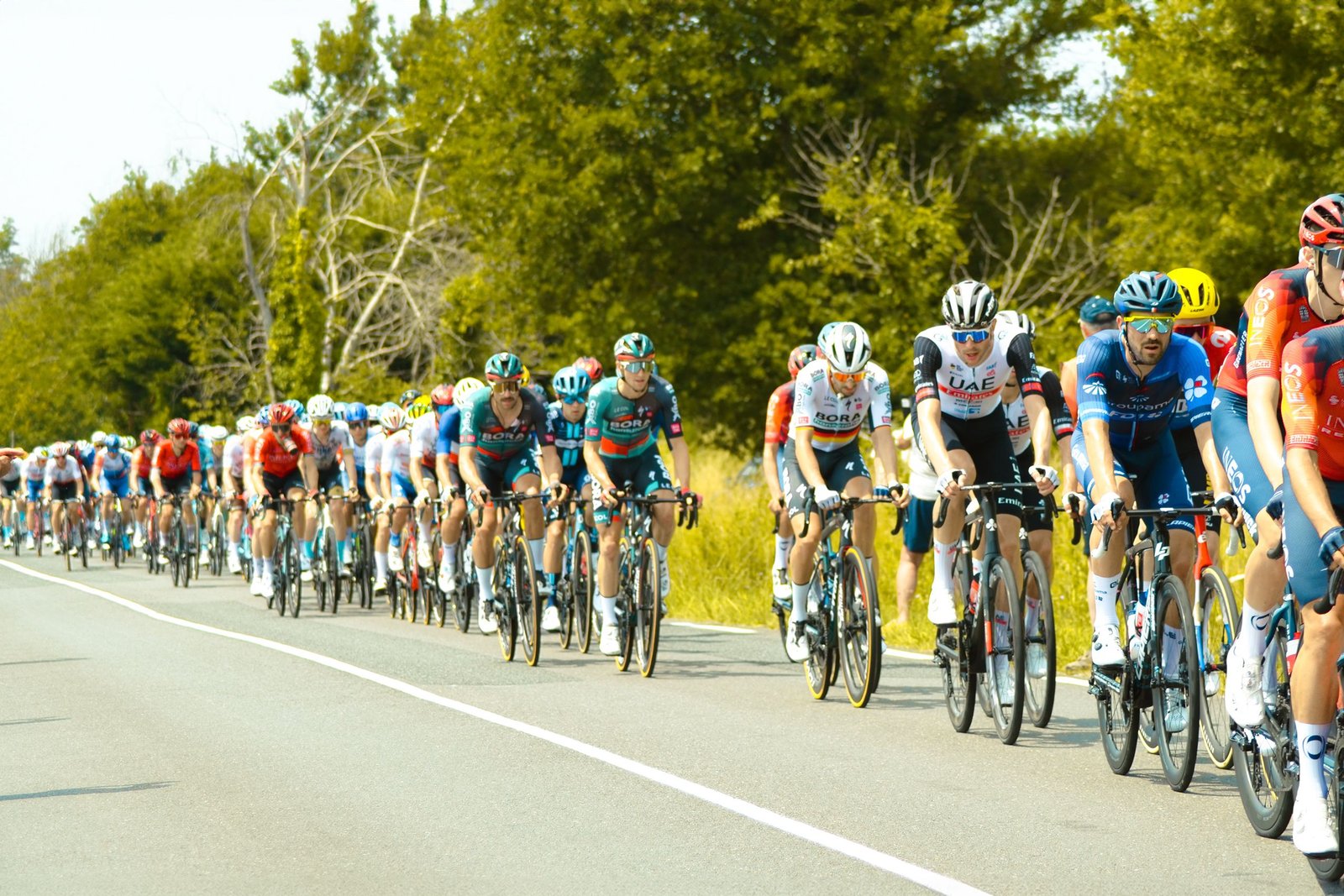
The rainbow jersey is up for grabs. The UCI Road World Championships 2026 take place from 20 to 27 September in Montréal, Canada, bringing the best road cyclists in the world together for eight days of racing. With time trials, a mixed relay, and road races across several age categories, it is one of the biggest weeks in the cycling calendar. This guide covers the schedule, the courses, the main storylines, and how to enjoy the action.
Montréal Welcomes the World Again
The 2026 edition is the 99th UCI Road World Championships. Montréal last hosted the event in 1974, which was the first time the championships were staged outside Europe. Its return 52 years later is a milestone for cycling in North America, and the continent has not hosted the event since Richmond in 2015.
Montréal is a natural fit. The city already hosts a major one-day race, the Grand Prix Cycliste de Montréal, so organizers know the roads, the crowds, and the climbs. The Mount Royal circuit is familiar to many professional riders, which adds to the sense of occasion.
Schedule: 13 Rainbow Jerseys to Win
There are 13 medal events in total, covering individual time trials, the mixed relay, and road races. Nearly 1,000 riders from more than 75 countries are expected to take part.
The programme builds in three stages:
- Opening day (20 September): The elite women and men contest their individual time trials.
- Early week (22 September): The mixed relay and junior time trials take place, along with under-23 time trials. This is one of the busiest days for time trial action.
- Road racing (final four days): Road races take over, with the elite women and elite men racing on 26 and 27 September. Wednesday, 23 September, has no medal event, giving riders a rest day.
The championships end on Sunday, 27 September, with the elite men’s road race, starting at 09:00 local time. All times are Eastern time, so fans in Europe, Asia, and elsewhere should convert them to their own time zones.
Course Guide: What Riders Face
The Mount Royal Circuit
The main road race circuit is a demanding 13.4-kilometer loop around Mount Royal in downtown Montréal. Each lap includes roughly 269 meters of climbing. Key features include the long Camillien-Houde climb of about 2.3 kilometers, the steep Côte de Polytechnique, and a final drag to the finish line on Avenue du Parc.
Because the circuit is repeated many times, the climbs wear riders down gradually. This favors strong climbers, punchy attackers, and riders who can recover quickly. Pure sprinters will find it difficult, though a small group could still contest a fast finish.
The Elite Men’s Road Race
The elite men face a true test of endurance: 273.7 kilometers with about 3,803 meters of climbing. The race starts in Brossard and travels through the Montérégie region before entering Montréal. There, the peloton completes 12 laps of the Mount Royal circuit. The long opening section allows breakaways to form, while the final laps are likely to be explosive.
The Elite Women’s Race
The elite women’s race starts from Brossard and also uses the Mount Royal circuit, with eight laps in the city. Shorter categories, such as junior and under-23 races, take place on repeated laps of the city circuit only.
Time Trials
The time trial courses follow a twisting route through central Montréal. Because of the corners and changes of pace, riders need bike-handling skill as well as raw power. Shorter categories use shortened versions of the full circuit.
Key Storylines to Follow
A Wide-Open Men’s Race
The biggest talking point is the absence of the reigning men’s champion, Tadej Pogačar, who won in Kigali in 2025. He is out of the championships after a season-ending crash at the Vuelta a España. As a result, the men’s time trial and road race are open to a wider group of contenders.
That could produce more attacking racing. Without a dominant favorite, teams may take more risks, and riders who might normally work for a leader could get a chance to shine.
Stars in the Time Trials
Riders such as Remco Evenepoel, Filippo Ganna, and Lotte Kopecky-era rivals in the women’s field are among the names attracting attention, along with time trial specialists like Grace Brown and Ellen van Dijk’s successors. Evenepoel in particular has made the championships a major target. The time trials on the opening days will set the tone for the week.
Home Crowds
Canadian fans have a rare chance to see the world’s best riders on home roads. Local riders know the Mount Royal climbs well, which could give them an edge in front of enthusiastic supporters.
Fan Experience: Where to Watch
More than 500,000 spectators are expected to line the roads across the week. The most popular viewing spot is likely to be the Camillien-Houde climb inside Mount Royal Park. The nearly two-kilometer ascent lets fans see the riders up close as they pass on every lap. The finish area on Avenue du Parc is another highlight.
Tips for attending:
- Arrive early. Popular spots fill up quickly, especially on the final weekend.
- Use public transport or walk. Road closures make driving difficult near the circuit.
- Dress for changing weather. September temperatures in Montréal can vary.
- Bring water and snacks. Races last for hours, especially the elite men’s event.
How to Watch from Home
If you cannot attend, live television and streaming coverage is available in many countries. Check your local sports broadcaster or the official UCI channels for rights in your region. Keep the time difference in mind. A 09:00 start in Montréal means mid-afternoon in Central Europe and evening in South Asia, so many fans will watch after work or replay highlights the next day.
Why the World Championships Matter
The World Championships are the traditional highlight at the end of the road season. Winners earn the right to wear the rainbow jersey in races throughout the following year, a symbol of prestige that riders remember for a lifetime. Because the event is contested by national teams rather than trade teams, it also creates unusual alliances and rivalries. Riders who normally compete against each other suddenly work together for their country.
The racing also comes at a crowded point in the calendar. The European Championships follow a week later in Ljubljana, so some riders must manage travel and recovery carefully. That adds another layer of tactical planning.
Conclusion
The UCI Road World Championships 2026 combine a historic host city, a challenging Mount Royal circuit, and an open men’s field. With 13 titles at stake and huge crowds expected, the week promises plenty of drama from the first time trial to the final lap on Avenue du Parc. Whether you are watching in person or from home, the closing races on 26 and 27 September are the moments to circle on your calendar.
Frequently Asked Questions (FAQs)
1. When and where are the UCI Road World Championships 2026 held?
They run from 20 to 27 September 2026 in Montréal, Quebec, Canada.
2. How many medal events are there?
There are 13 medal events across individual time trials, the mixed relay, and road races.
3. When is the elite men’s road race?
It takes place on Sunday, 27 September, starting at 09:00 local time. The race covers 273.7 kilometers and finishes with 12 laps of the Mount Royal circuit.
4. Will Tadej Pogačar defend his title?
No. He will miss the championships after a season-ending crash at the Vuelta a España, which leaves the men’s race wide open.
5. Where is the best place to watch the races in person?
The Camillien-Houde climb on Mount Royal is a favorite viewing area because fans can see riders up close on every lap. The finish on Avenue du Parc is also a popular spot.