
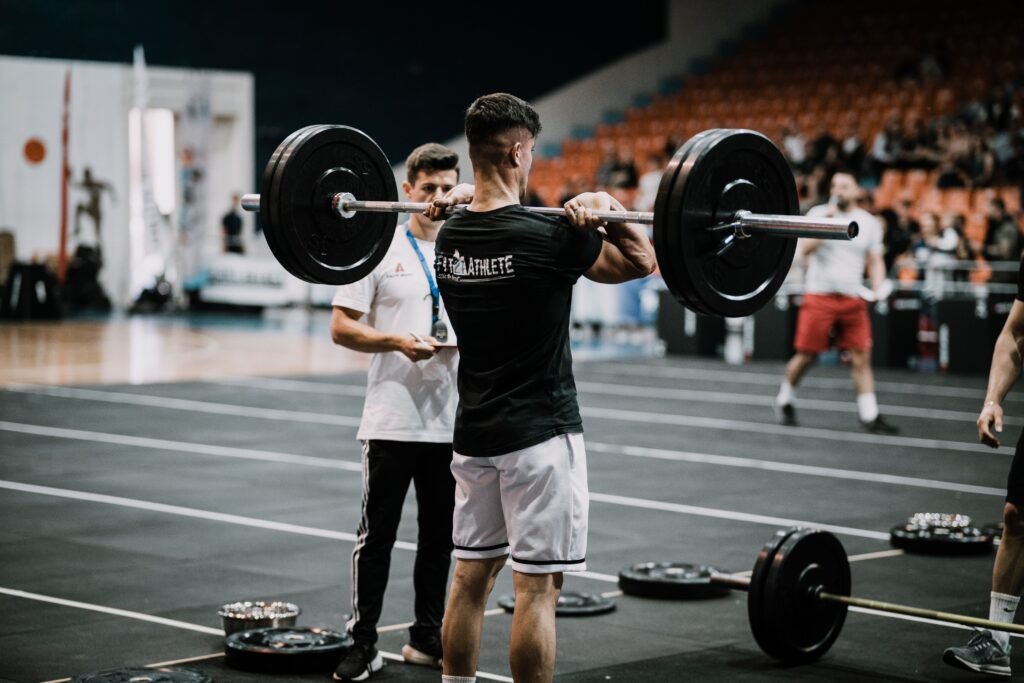
Muscle fitness is a key part of athletic performance, helping athletes develop strength, power, endurance, and control. Unlike competitive sports with fixed rules and scoring systems, muscle fitness describes the physical condition and training capacity of the body’s muscles. It plays a major role in football, cricket, athletics, basketball, swimming, combat sports, and many other disciplines. Strong muscles help athletes produce force, maintain balance, handle physical contact, and perform repeated movements. Muscle fitness also supports everyday physical performance and long-term mobility. For athletes, developing muscular strength is not simply about appearance. It prepares the body to meet the demands of competition, supports efficient movement, and reduces the risk of performance-limiting fatigue.
What Is Muscle Fitness?

Muscle fitness refers to the ability of muscles to produce and sustain force during physical activity. It has several important components, including muscular strength, muscular endurance, power, and functional control. Each component has a different role in sport.
Muscular strength is the maximum force a muscle or muscle group can produce. Muscular endurance is the ability to keep working over time without excessive fatigue. Power combines force with speed, which makes it especially important for explosive sporting actions such as jumping, sprinting, throwing, and changing direction.
Muscle fitness should not be confused with bodybuilding. Bodybuilding focuses heavily on muscle size, symmetry, and appearance. Athletic muscle fitness is more closely connected with performance. A successful athlete needs muscles that can perform specific movements efficiently under competitive pressure.
Why Muscle Fitness Matters in Sport
Almost every sport places demands on the muscular system. A sprinter needs powerful leg muscles to accelerate. A cricketer relies on the legs, hips, trunk, shoulders, and arms to generate force while batting or bowling. Football players need strength to sprint, tackle, jump, and maintain control of the ball.
Strong and well-conditioned muscles can also help athletes maintain technique when fatigue develops. This matters during long matches and competitions where physical performance can decline late in the event. Muscular endurance becomes particularly valuable in sports that involve repeated efforts.
Muscle fitness also contributes to stability and movement control. The muscles surrounding the joints help athletes maintain efficient positions while running, landing, lifting, or changing direction. For this reason, strength development has become a central part of modern athletic preparation.
The History and Development of Muscle Training

Training for muscular strength is not a modern idea. Ancient athletes used forms of resistance training to prepare for physical competition. Historical accounts describe Greek athletes lifting heavy objects and using resistance exercises as part of their preparation.
Organized strength training became more structured during the nineteenth and twentieth centuries. The development of barbells, weight plates, resistance machines, and scientific exercise research gave athletes more ways to measure and improve strength.
The approach changed significantly as sports science developed. Coaches began looking beyond maximum strength and considered power, movement quality, recovery, and sport-specific demands. Modern programs can combine resistance exercises with sprinting, jumping, mobility work, conditioning, and technical practice.
This evolution has made muscle fitness an important part of professional sport rather than a separate activity reserved for strength athletes.
How Muscle Fitness Is Developed
Muscle fitness can be developed through progressive resistance training. Resistance may come from free weights, machines, resistance bands, body weight, or other training equipment. The goal is to place an appropriate demand on the muscles and gradually improve their ability to respond.
Different sports require different strength qualities. A power athlete may place greater emphasis on explosive movements, while an endurance athlete may need greater muscular endurance. Team-sport athletes often require a combination of strength, power, speed, and repeated-effort capacity.
Training volume and intensity also change throughout a sporting season. Athletes may build a physical foundation during preparation periods before adjusting their workload as competition approaches. During a busy season, maintaining strength while managing fatigue becomes more important.
Recovery is another essential part of development. Muscles adapt between training sessions, not simply during exercise. Sleep, nutrition, rest periods, and sensible workload management therefore influence the results of strength training.
Muscle Fitness Across Major Sports
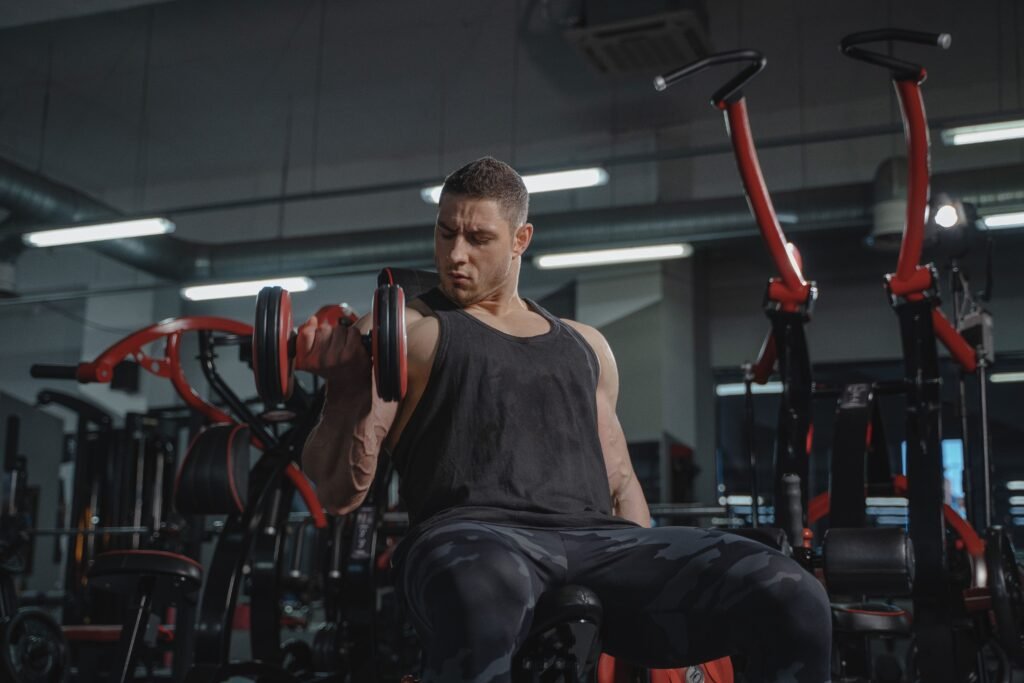
The importance of muscle fitness varies according to the demands of each sport. In athletics, strength and power are fundamental to events such as sprinting, jumping, and throwing. Sprinters require explosive force, while throwers depend heavily on the ability to generate power through the entire body.
In football, muscular strength supports acceleration, balance, physical contests, jumping, and repeated movement. Basketball players need lower-body power for jumping and rapid changes of direction, while swimmers depend on coordinated muscular force to move efficiently through the water.
Cricket provides another clear example. Fast bowlers require strength and power through the legs, hips, trunk, and upper body. Batters need force production, stability, and rotational power. Wicketkeepers also require muscular endurance because their position involves repeated crouching, movement, and rapid reactions.
Combat sports place their own demands on muscle fitness. Athletes need strength, power, grip endurance, and the ability to produce force repeatedly while maintaining technique.
Testing Strength, Power, and Muscular Endurance
Muscle fitness can be assessed in several ways. Strength tests can measure how much force an athlete can produce during a specific movement. Common gym-based assessments may involve controlled resistance exercises, although the appropriate test depends on the athlete and sport.
Muscular endurance can be assessed through repeated movements or sustained efforts. Power can be examined through activities such as jumping or other explosive movements. Coaches may also use sport-specific testing to understand how physical qualities translate into competition.
Testing is useful because it gives athletes and coaches measurable information. However, one test cannot describe complete athletic ability. A player may have excellent maximum strength but still need better speed, coordination, endurance, or technical skill.
For that reason, muscle fitness is best viewed as one part of overall athletic performance rather than the only measure of sporting ability.
The Modern Role of Muscle Fitness in Sport

Professional sport has increasingly embraced strength and conditioning as an essential part of athlete preparation. Teams and individual competitors now use structured programs designed around the physical demands of their sport, position, competition schedule, and training history.
Technology has also changed how muscle fitness is monitored. Performance staff can track training loads, movement patterns, recovery indicators, and physical testing results. This information can help coaches make more informed decisions about workload and preparation.
The emphasis has also shifted from simply becoming stronger to becoming stronger in useful ways. An athlete does not necessarily benefit from adding strength that does not transfer to their sport. Efficient movement, power, coordination, and the ability to repeat high-quality actions are equally important.
For fans, this helps explain why athletes can look physically different while reaching a similar level of performance. A marathon runner, rugby player, gymnast, and Olympic weightlifter all require exceptional physical preparation, but their muscle fitness reflects very different sporting demands.
Muscle fitness remains one of the foundations of athletic performance. It is not a sport with a single championship, universal scoring system, or fixed competition format. Instead, it is a physical quality that supports athletes across almost every competitive discipline. The best approach depends on the demands of the sport, the athlete’s role, and the stage of the season. When strength, power, endurance, and movement control are developed together, muscles become more than a symbol of fitness. They become a practical foundation for speed, skill, resilience, and competitive performance.
Frequently Asked Questions
What is muscle fitness?
Muscle fitness is the ability of muscles to produce force, maintain effort, and generate power during physical activity. It includes muscular strength, endurance, and power, all of which contribute to athletic performance and efficient movement.
Is muscle fitness the same as bodybuilding?
No. Bodybuilding mainly emphasizes muscle size, symmetry, and appearance, while muscle fitness focuses on physical performance. Athletes train muscles to produce useful strength, power, endurance, and stability according to the demands of their sport.
Why is muscle fitness important for athletes?
Muscle fitness helps athletes produce force, control movement, maintain technique, and handle repeated physical demands. Strong and well-conditioned muscles can support performance in sports involving running, jumping, throwing, lifting, contact, or rapid changes of direction.
Which sports require the most muscle fitness?
Nearly every sport requires muscle fitness, although the specific demands differ. Weightlifting emphasizes maximum strength, and sprinting requires explosive power, while football, basketball, cricket, and rugby require combinations of strength, power, endurance, and movement control.
How is muscle fitness measured?
Muscle fitness can be measured through strength, endurance, and power tests. The most suitable assessment depends on the athlete and sport. Coaches often combine physical testing with sport-specific performance measures to evaluate overall athletic ability.