

Starting a workout routine often leads to quick burnout or injury because newcomers try advanced training splits too early. Many people jump into intense daily workouts, cut calories drastically, and copy routines designed for experienced bodybuilders. As a result, excessive soreness and fatigue cause them to quit within weeks. Building long-term health requires a structured, sustainable foundation instead of temporary intensity. Understanding fitness for beginners allows you to build strength, establish consistency, and avoid common starting pitfalls.
The Science of Fitness for Beginners
When starting a new training routine, your body undergoes significant neuromuscular adaptations. In the first few weeks, strength gains come primarily from your brain learning to recruit motor units effectively. Your central nervous system becomes far more efficient at signaling muscle fibers to contract. Therefore, you can get stronger without immediate structural changes to muscle tissue.
Cardiovascular adaptations also happen quickly when training begins. Heart stroke volume increases, allowing more oxygenated blood to reach working tissues with each beat. At the same time, your mitochondria expand in density, improving total cellular energy production.
However, connective tissues like tendons and ligaments adapt much slower than muscle tissue. Pushing weights or volume too quickly strains these supporting structures before they can adapt. Progressive overload must be introduced gradually to give joints time to strengthen alongside your muscles.
Step-by-Step Fitness Action Plan
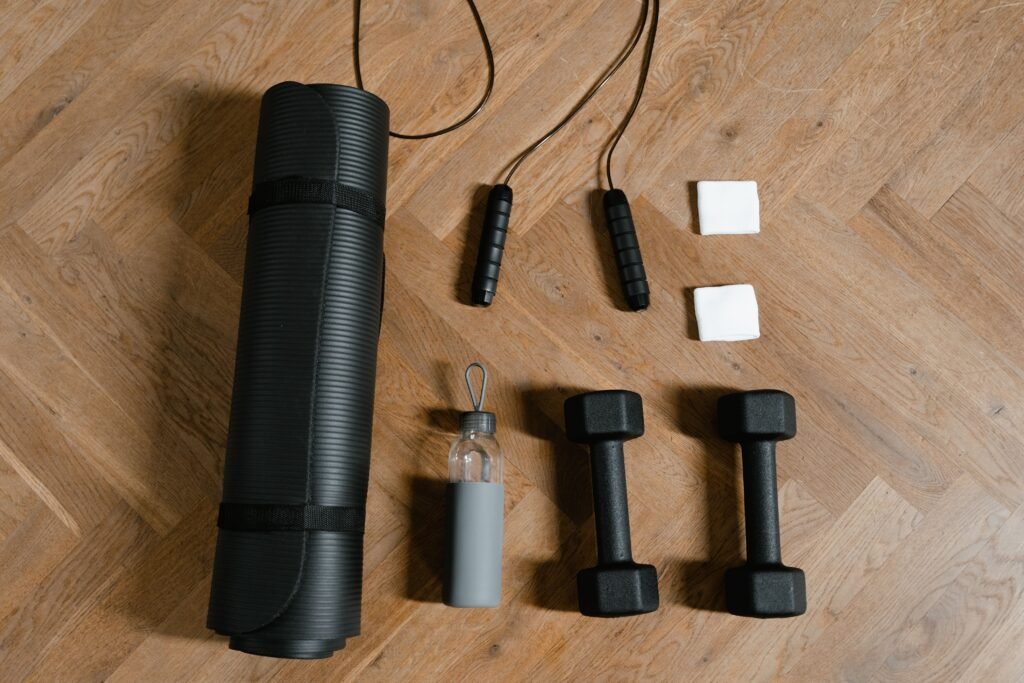
A structured weekly schedule helps turn exercise into a reliable routine. Follow this simplified step-by-step action plan to build foundational physical capacity safely:
- Schedule 3 non-consecutive workout days per week, such as Monday, Wednesday, and Friday.
- Begin every session with 5 to 10 minutes of light dynamic movements, including leg swings and arm circles.
- Select 4 to 5 basic exercises per session, focusing on movements like goblet squats, bodyweight rows, overhead presses, and lunges.
- Perform 2 to 3 sets of 8 to 12 repetitions per exercise using manageable weights.
- Rest for 60 to 90 seconds between sets to allow full physical recovery.
- Add 20 minutes of brisk walking or light cycling after strength training or on rest days.
- Increase the load or total repetitions slightly every two weeks when execution remains clean.
Pro-Trainer Tip
Prioritize mastering movement execution before adding extra weight. Focus on moving through a full, painless range of motion with absolute control on every repetition. Building proper motor patterns early protects your joints and establishes the foundation for consistent weight increases later.
Nutrition & Recovery Integration

Proper nutrition supports your physical workload without requiring extreme restriction. Aim for a balanced intake featuring lean protein sources like chicken, fish, tofu, or lentils alongside whole grains and healthy fats. Consuming adequate protein provides essential amino acids needed to repair micro-tears created during strength sessions.
Hydration plays an equally vital role in exercise performance and recovery. Drink water consistently throughout the day, ensuring you hydrate before, during, and after training sessions. Adequate fluids maintain electrolyte balances and prevent early muscular fatigue.
In addition, sleep remains the most effective recovery tool available. Aim for 7 to 9 hours of quality sleep nightly to optimize tissue repair and central nervous system recovery. Rest days are equally important, as tissue reconstruction occurs while resting rather than during the actual workout.
Common Fitness Mistakes & How to Avoid Them
Mistake 1: Training Every Single Day
Exercising daily without break days overworks connective tissues and leads to severe physical fatigue.
Fix: Keep workouts to 3 or 4 days per week, reserving alternate days for full rest or active recovery like light walking.
Mistake 2: Changing Exercises Too Frequently
Switching workouts constantly prevents your nervous system from mastering basic movement patterns and tracking strength gains.
Fix: Commit to the same core exercises for at least 6 to 8 weeks before changing your routine.
Mistake 3: Ignoring Pain Signals
Pushing through sharp joint pain often transforms minor tissue irritation into long-term overuse injuries.
Fix: Stop any movement that creates sharp pain immediately and replace it with a comfortable variation.
Mistake 4: Skipping the Dynamic Warm-Up
Jumping straight into heavy or fast movements without preparation increases the risk of muscle strains.
Fix: Dedicate 5 to 10 minutes before every session to elevate core temperature and mobilize key joints.
Frequently Asked Questions
Q1: How long does it take to see results?
Initial energy and strength improvements usually occur within 3 to 4 weeks, while visible physical changes generally become noticeable after 8 to 12 weeks of consistent effort.
Q2: Is fitness for beginners suitable for older adults?
Yes, strength and mobility training benefits adults of all ages. Older individuals should focus heavily on controlled movements, proper warm-ups, and gradual progression to safeguard joint health.
Q3: Do I need a specific diet or supplement?
No special supplements are needed when starting out. Focus on consuming whole foods, adequate protein, and plenty of water before considering additions like protein powder or creatine.
Q4: How can I reduce injury risk?
Reduce injury risk by mastering exercise form, warming up thoroughly, avoiding sudden jumps in weight, and allowing adequate rest between workout sessions.
Q5: Is home training better than joining a gym?
Neither approach is universally superior. Home workouts using bodyweight or bands offer convenience, while gyms provide broader equipment options. Choose the environment you will visit consistently.