Asia’s biggest sporting festival has arrived in central Japan. The 20th Asian Games, known as Aichi-Nagoya 2026, opened on 19 September and ran for sixteen days, ending with the closing ceremony on 4 October at Nagoya’s Mizuho Park Athletic Stadium, starting at 6:00 PM Japan time. Thousands of athletes from across the continent are competing in dozens of sports, from athletics and swimming to sepak takraw and wushu. For Japan, the Games mark a return to the Asian stage after Tokyo 1958 and Hiroshima 1994. This article covers the event’s history, venues, sports, culture, and legacy.
How Aichi-Nagoya Won the Games
The road to these Games began in 2016. The Olympic Council of Asia accepted the joint proposal from Aichi Prefecture and its capital Nagoya at its general assembly in Da Nang, Vietnam, in September 2016. The bid nearly collapsed because financial differences between the two parties were only resolved in 2015 and 2016. That the prefecture and the city found common ground is fitting, given that the Games’ motto is “Imagine One Asia.”
The event is also a homecoming of sorts for Japan. Japan is hosting the Asian Games for the third time after Tokyo 1958 and Hiroshima 1994. Each of those earlier editions came at a moment of national reinvention. Tokyo 1958 signalled Japan’s postwar recovery, and Hiroshima 1994 carried a message of peace. Aichi-Nagoya 2026 comes at a time when the region is again looking for shared platforms that go beyond politics and commerce.
The Opening Ceremony: “Harmonic Heart Beat”
The Games opened on the evening of Saturday, 19 September. Emperor Naruhito declared them open, and Olympic hammer throw champion Murofushi Koji lit the cauldron together with his father, Shigenobu, himself a five-time Asian champion in the same event. Few images could better capture the spirit of the Games than a father and son, two generations of one athletic family, sharing the flame.
The ceremony’s theme was “Harmonic Heart Beat.” The mascot Honohon took an active part, and a kabuki actor flew across the centre stage in front of a model of a famous Aichi landmark. The mix of traditional theater and modern staging reflected the region’s identity. Aichi is known for its samurai history, its castle, and its role as the heartland of Japanese manufacturing. Empress Masako, the Crown Prince and Princess Akishino, and IOC President Kirsty Coventry also attended. The IOC president’s presence underlines how closely the Olympic movement watches these Games, especially with Los Angeles 2028 approaching.
Scale of the Competition
The numbers are large. The Games feature 43 sports and 469 events across 54 competition venues. Estimates of participation vary by source. One source expects more than 15,000 athletes competing, while another gives a lower figure of about 10,840. Either way, roughly 45 nations and territories are represented. This is a continental gathering that dwarfs most single-sport world championships.
The program mixes Olympic and non-Olympic disciplines. Both Olympic and non-Olympic disciplines are included. That mix is a hallmark of the Asian Games, and it gives the event its own flavor. Alongside familiar sports such as swimming, gymnastics, and football, there are sports with deep regional roots that rarely appear on television elsewhere in the world. Sepak takraw, kurash, ju-jitsu, and wushu are among the disciplines using Aichi’s venues, giving athletes from Central, South, and Southeast Asia a global-scale stage.
Venues: Old, New, and Rebuilt
Organizers built the games around a “use what exists” philosophy. The plan relies on existing facilities, supplemented by new, redeveloped, and temporary venues where necessary. That approach reflects a lesson learned from the costs of recent mega-events.
The centerpiece. The heart of the Games is the stadium in Nagoya’s Mizuho Sports Park, now called Paloma Mizuho Stadium. It hosts both the opening and closing ceremonies, the athletics program, and the start and finish of the marathon. It is a rebuilt stadium on the site of the old ground. Construction began in 2021, and it opened on 18 April 2026. The closing ceremony on 4 October will therefore be held in a venue that is barely five months old.
A new arena. Aichi International Arena, designed by architect Kengo Kuma, opened in July 2025 as a replacement for the 1964 Aichi Prefectural Gymnasium. It hosts basketball and other indoor sports, and its arrival is a symbol of the region’s modernization.
Beyond Nagoya. The Games are spread across several cities. Baseball is played in Okazaki and Toyohashi, softball in Anjo, and archery in Okazaki, while badminton takes place in Ichinomiya. Handball is played at the gymnasium known as “Trio” in Inazawa. Some events go further afield. Competitions are also staged in Tokyo, Shizuoka, Gifu, and Osaka, and several Tokyo 2020 venues are reused, including the Tokyo Aquatics Centre for swimming and diving and the Izu Velodrome for track cycling. The Equestrian Park in Tokyo, which has hosted Olympic equestrian events in both 1964 and 2020, continues its long history here.
This dispersed model spreads the economic benefit across the region. It also means that fans and journalists must plan their travel carefully, something Japan’s efficient rail network makes easier than it would be in most host countries.
The Sixteen-Day Program
The Games officially cover 19 September to 4 October, though some competitions started earlier. Competition began as early as 10 September, with the official start on 19 September. Basketball, for example, ran from 10 to 26 September. This early start helps fit 43 sports into a workable calendar.
Some highlights of the schedule:
- Athletics: 23–29 September. Athletics comprises 50 medal events across track and field, road running, and racewalking. The stadium will be the focus of attention this week, and racewalking uses a loop course near Aichi Prefectural Government Office and Nagoya City Hall.
- Badminton: 20–29 September, in Ichinomiya.
- Baseball: 21–27 September in Okazaki and Toyohashi, followed by softball: 26 September–3 October in Anjo.
- Archery: 26 September–3 October in Okazaki.
- Water polo: 20 September–3 October at the Rainbow Pool in Nagoya.
The final days, therefore, feature the last rounds of softball, water polo, and archery, and the Games conclude with the ceremony on 4 October.
The Contenders and the Stars
The medal table is expected to feature the usual heavyweights. China, host Japan, and South Korea are the three traditional powerhouses at the Asian Games. China dominated recent editions with its depth across swimming, diving, gymnastics, table tennis, and shooting. Japan hopes home support will lift its athletes, and South Korea remains formidable in archery, taekwondo, and team sports.
But the story of these games is not only about the top three. India, Uzbekistan, Kazakhstan, Iran, Thailand, and other nations regularly win medals in specific sports, and the Games often produce breakout performances from countries that go unnoticed at global events. Among the young talents attracting attention are tennis player Alexandra Eala and cricketer Vaibhav Sooryavanshi, a reminder that the Asian Games also give a platform to sports such as cricket that have huge followings across the continent.
The Road to Los Angeles
The Games also matter beyond the medal table. The Games serve as an Olympic qualifier in various sports, offering direct quota places and indirect ranking points. For many athletes, a strong performance in Aichi-Nagoya is a step towards LA28. This adds a sharper competitive edge in disciplines such as swimming, athletics, and combat sports, where an Asian title could change a career trajectory.
Culture, Fans, and the Atmosphere
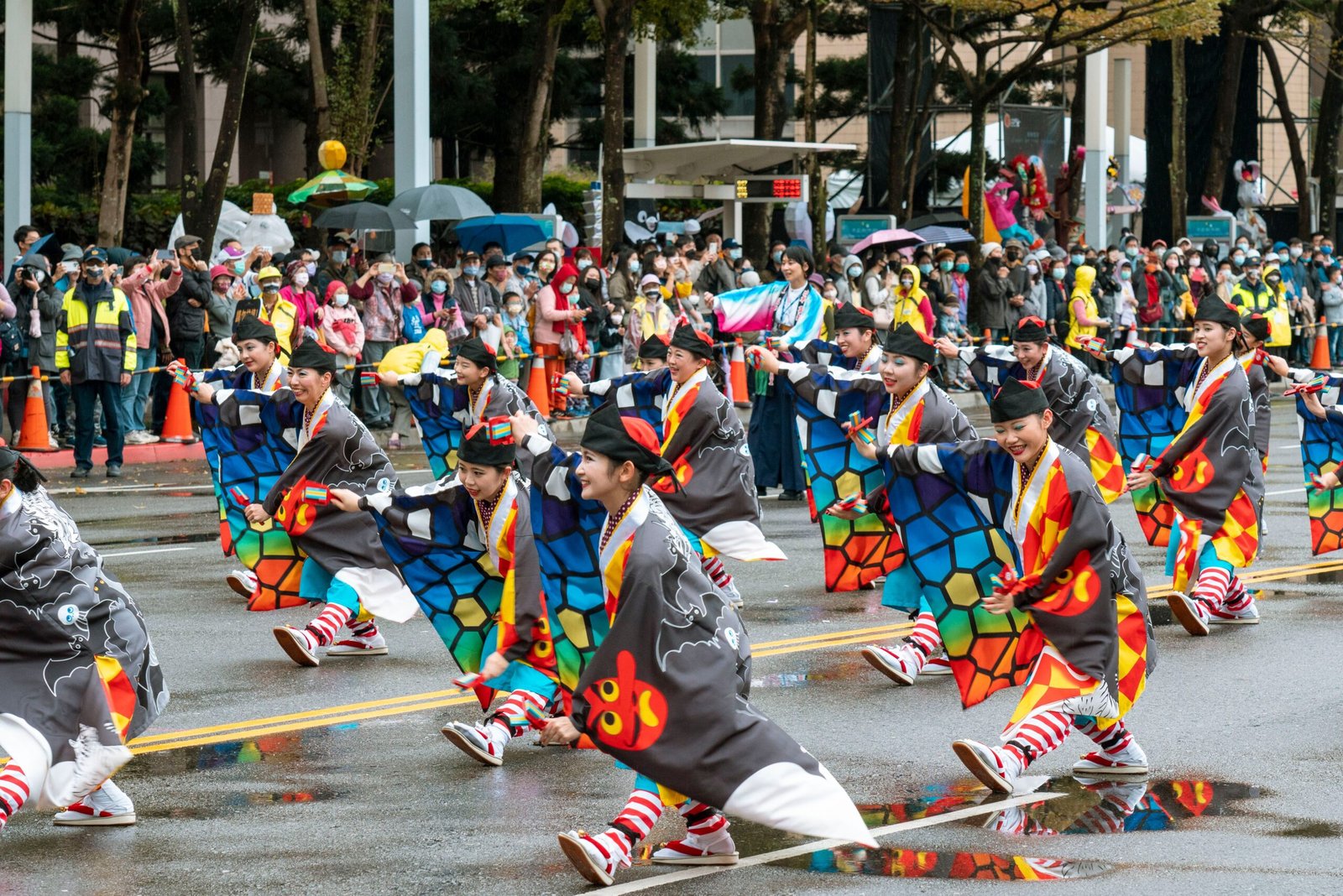
Sport is only part of the picture. The Games are also a cultural showcase. The Chubu region is home to Nagoya Castle, the birthplace of Toyota, and a food culture that includes miso katsu, hitsumabushi (grilled eel), tebasaki chicken wings, and the famous “Nagoya-meshi” tradition. Visitors from across Asia are discovering these flavors alongside the competition.
Fans also have a central meeting point. Hisaya Ōdori Park will host a fan zone, celebration, and cultural exchange hub during both the Asian Games and the Asian Para Games, called One Heart World. Modelled on the “Champions Park” used at Paris 2024, it should give people without tickets a way to share in the atmosphere, watch events, and meet visitors from other countries.
The mascot Honohon and the “Imagine One Asia” motto add to the sense of a shared experience. Japanese hospitality, from volunteers to transport staff, is expected to leave a strong impression on visitors, as it did in Tokyo.
Technology, Transport, and Organization
Japan is known for precision, and these games will test that reputation. Large-scale events spread over several prefectures require coordination of security, accommodation, broadcast feeds, and anti-doping systems. Competitors and officials will move between Nagoya, Tokyo, Izu, and smaller host cities by rail and road. The event website provides venue and travel guidance, encouraging visitors to “get to the venue the smart way,” with public transport as the recommended option.
Broadcasting and digital access are also central. Viewers across Asia, many of them on mobile devices, will follow the Games through television and streaming platforms, and organizers have invested in making information about schedules and results widely available.
Challenges
No mega-event comes without difficulties. Japan is in the middle of the typhoon season, and September weather can be humid, so heat and rain management matter, especially for outdoor events such as athletics, the marathon, and archery. The distribution of venues across many towns also creates logistical demands. And cost control is a constant concern. The reuse of existing facilities is meant to keep spending in check, but public scrutiny of Games budgets in Japan has been intense since Tokyo 2020.
Political and regional tensions can also shadow a continental event. The Asian Games have historically been a place where rival nations meet under the same rules, and this edition is no exception. The organizers’ emphasis on harmony reflects that reality.
The Closing Ceremony on 4 October
The Games conclude on Sunday 4 October, with the ceremony at Paloma Mizuho Stadium beginning at 6:00 PM Japan time. Closing ceremonies typically follow a familiar sequence: a parade of athletes, the lowering of the Olympic Council of Asia flag, thanks to volunteers and spectators, and a handover to the next host. In this case, that is Doha, which will stage the 2030 Games, followed by Almaty for the Asian Winter Games in 2029 and the wider OCA calendar. Expect a celebration of Japanese and regional culture, performances by artists, and a farewell from the mascot Honohon.
It will also be an emotional moment for the thousands of volunteers, staff, and residents who prepared for this event for a decade. The end of the sixteen days will mark the end of one chapter, but not of the Games in Aichi-Nagoya. The 5th Asian Para Games will follow from 18 to 24 October 2026, with 508 events in 18 sports, using the same main stadium. That means the venues, volunteers, and fan zone will stay active for another three weeks after the closing ceremony.
Legacy
The lasting value of the Games will be measured in more than medals. Nagoya gains a modern stadium and a new arena, and local communities get upgraded facilities that can serve clubs, schools, and residents. Nagoya’s football club and basketball team already call the new venues home, which helps ensure they are used. There is also the human legacy: young Japanese who saw elite competition up close, volunteers who developed skills, and athletes from smaller nations who gained experience and exposure.
For Asia as a whole, the Games renew a simple idea: that a continent of extraordinary diversity, with different languages, political systems, and traditions, can gather every four years and compete peacefully. In a period of geopolitical strain, that message carries weight.
From its opening on 19 September to its closing on 4 October, the 20th Asian Games offer sixteen days of competition, culture, and connection. With 43 sports, hundreds of events, dozens of venues, and thousands of athletes, Aichi-Nagoya 2026 is one of the largest sporting events on the planet. The closing ceremony at 6:00 PM Japan time on 4 October will wrap up the Games, but the memories, the Olympic qualification stakes, and the Para Games that follow ensure that the story continues. As the motto says, it is about imagining one Asia, and for sixteen days, Aichi and Nagoya are making that vision real.
Asian Games 2026 (Aichi-Nagoya): 5 FAQs
1. When and where are the Games being held?
The 20th Asian Games run from 19 September to 4 October 2026, a total of 16 days, in Aichi Prefecture and Nagoya, Japan. Some sports began earlier, and a few events are held in Tokyo, Shizuoka, Gifu, and Osaka. Most competition takes place in Nagoya and other Aichi cities.
2. When is the closing ceremony, and where will it be held?
The closing ceremony is on 4 October 2026 at Nagoya City Mizuho Park Athletic Stadium (Paloma Mizuho Stadium), starting at 6:00 PM Japan Time. The same stadium hosted the opening ceremony on 19 September.
3. How big is the event?
The Games feature 43 sports and 469 events across 54 competition venues. About 45 nations and territories are taking part. Reported athlete numbers vary by source, from roughly 10,800 to over 15,000.
4. Which countries are expected to dominate the medal table?
China, host Japan, and South Korea are the traditional powerhouses. Countries such as India, Uzbekistan, Kazakhstan, Iran, and Thailand also win medals in specific sports, so surprises are common.
5. What happens after the Games end?
The 5th Asian Para Games will take place from 18 to 24 October 2026, with 508 events in 18 sports, using the same main stadium. The Hisaya Ōdori Park fan zone, called One Heart World, will also serve both events.