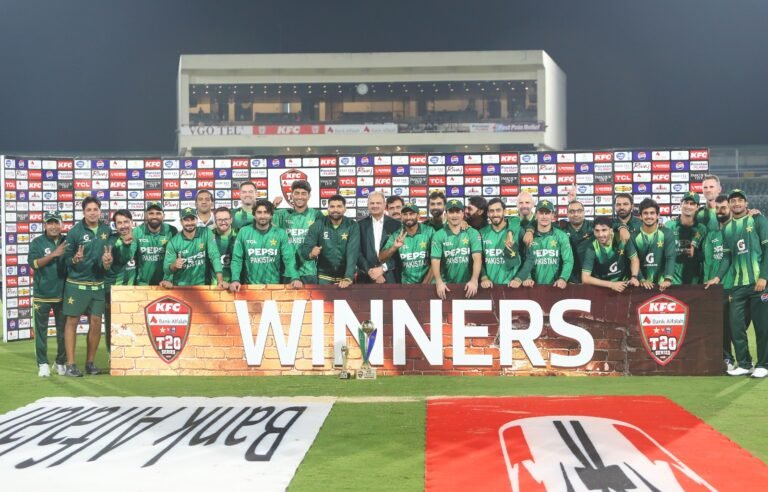
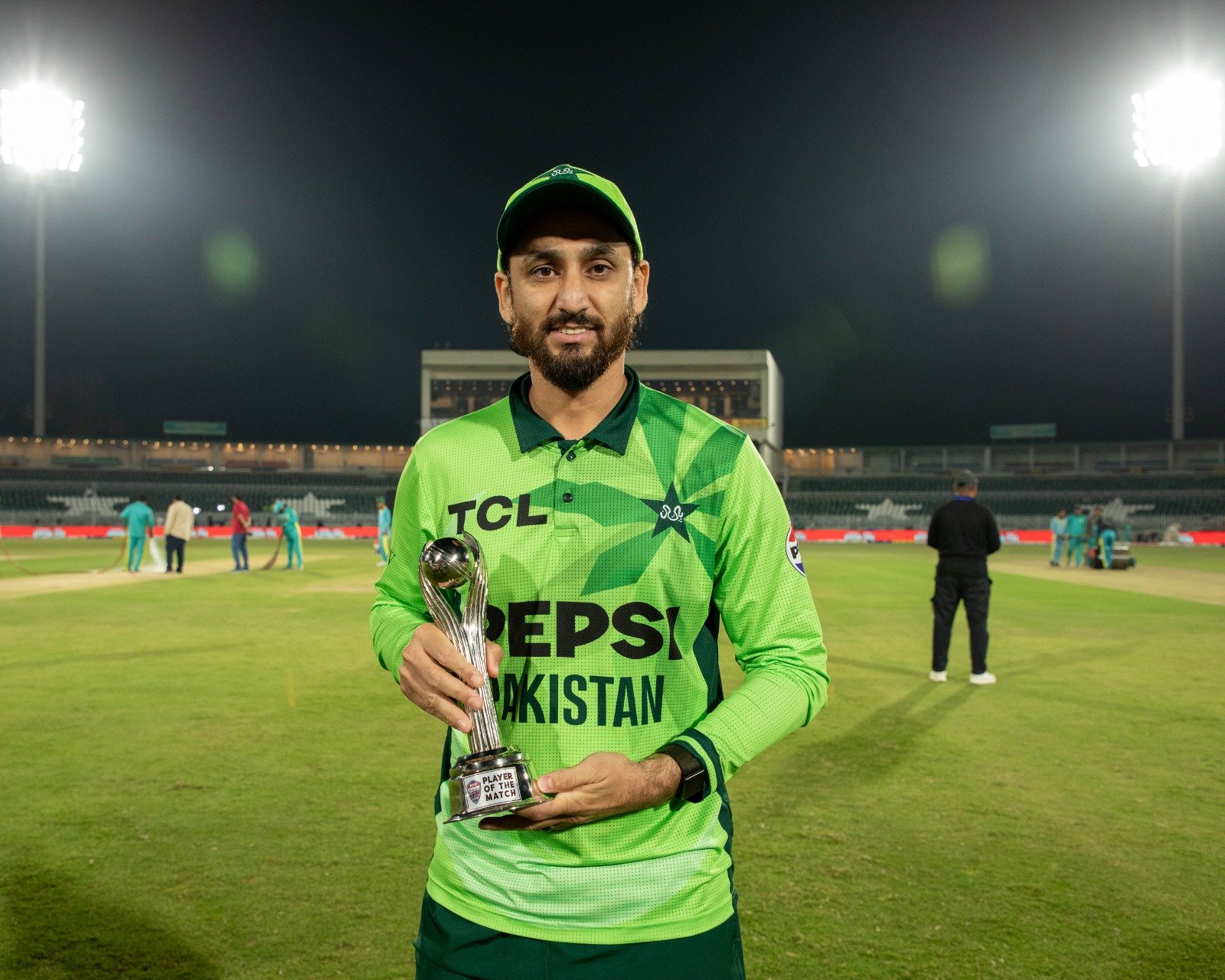
Pakistan began the ODI tri-series with a convincing 37-run victory over Sri Lanka at the Rawalpindi Cricket Stadium on Sunday, October 18, 2026. A brilliant century from Salman Ali Agha and a strong performance by Pakistan’s pace attack helped the home side defend a total of 305 runs and start the tournament on a winning note.
Salman played a superb innings of 107 runs from just 90 balls, giving Pakistan the momentum they needed after losing two early wickets. His fourth ODI century proved decisive as Pakistan recovered from a difficult start to post a competitive total. In reply, Sri Lanka fought back through a determined fifth-wicket partnership between Pavan Rathnayake and Janith Liyanage. However, Pakistan’s fast bowlers took control in the closing stages to dismiss the visitors for 268 in 48.1 overs.
The victory gave Pakistan two valuable points at the start of the tri-series, which also features England. Pakistan’s bowlers shared all ten Sri Lankan wickets, underlining the strength of the team’s pace attack and ensuring that the hosts finished the opening match with a memorable win.
Salman Ali Agha Leads Pakistan’s Recovery
Pakistan faced an early challenge after Sri Lankan captain Kusal Mendis won the toss and elected to bowl first. Fast bowler Dilshan Madushanka made an immediate impact, removing Fakhar Zaman and Saim Ayub within the first 5.5 overs.
The early dismissals put Pakistan under pressure and increased the importance of building a steady partnership. Debutant Saad Baig joined Babar Azam at the crease, and the pair responded positively by adding 74 runs. Their partnership helped Pakistan regain stability and prevented Sri Lanka from taking complete control of the innings.
Babar contributed 45 runs from 57 deliveries, including six boundaries. His innings also marked an important personal milestone. He reached 16,000 international runs, becoming the fifth Pakistani batter to achieve the landmark after Inzamam-ul-Haq, Younis Khan, Mohammad Yousuf and Javed Miandad.
Saad also made an encouraging impression on his ODI debut. The young batter scored 39 runs from 40 balls, hitting three fours and two sixes. His confident approach helped Pakistan maintain a healthy scoring rate despite the early setbacks.
However, Sri Lanka struck again when Eshan Malinga dismissed Saad in the 20th over and Babar in the 22nd. Pakistan needed another partnership to rebuild the innings, and Salman Ali Agha stepped forward at a crucial moment.
Salman and Hasan Nawaz Build a Crucial Partnership
Salman joined Hasan Nawaz as Pakistan looked to build a strong platform for the final overs. The two batters showed patience and attacking intent, adding 97 runs for the fifth wicket from 94 balls.
Hasan supported Salman with a useful contribution of 37 runs from 49 deliveries. He struck two fours and two sixes, helping Pakistan keep the scoreboard moving while allowing Salman to take responsibility for the main scoring effort.
Salman combined controlled stroke play with timely aggression. He found gaps in the field, punished loose deliveries and maintained pressure on the Sri Lankan bowlers. His ability to rotate the strike and hit boundaries made the partnership especially valuable.
The right-handed batter reached his century in the 45th over, taking only 82 balls to reach the landmark. His hundred provided Pakistan with a major boost and placed the team in a strong position to finish the innings with a challenging total.
Salman eventually scored 107 from 90 deliveries before Asitha Fernando dismissed him. His innings included important boundaries and gave Pakistan the foundation they needed to reach 300 runs.
Pakistan lost momentum during the closing overs, however. Sri Lanka conceded only 26 runs while taking four wickets in the final five overs. Eshan Malinga finished with four wickets for 46 runs, while Asitha Fernando claimed three for 59 and Madushanka took two wickets for 67 runs.
Pakistan were bowled out for 305 in 49.5 overs. Although the late collapse prevented them from batting out the full 50 overs, Salman’s century and the contributions from Babar, Saad and Hasan ensured that the hosts had a competitive total to defend.
Saad Baig Makes an Encouraging ODI Debut
The opening match also provided Pakistan with an opportunity to assess a promising young player. Saad Baig became the 262nd player to represent Pakistan in men’s ODI cricket.
His 39-run innings was important because it came after the early dismissals of Pakistan’s opening batters. Rather than allowing Sri Lanka to dominate, Saad supported Babar and helped rebuild the innings through a valuable partnership.
His three fours and two sixes demonstrated his ability to score in different ways. Although he could not convert his start into a half-century, his contribution helped establish the platform for Salman’s match-winning innings.
Saad also made an impact behind the stumps, taking two catches during Sri Lanka’s innings. His performance with both bat and gloves gave Pakistan several encouraging signs for the future.
For a debutant, contributing in two major areas of the game is a positive achievement. His performance added depth to Pakistan’s display and provided the team with another reason to be pleased with the opening victory.
Pakistan’s Pace Attack Strikes Early
Defending 306 runs, Pakistan needed early wickets to prevent Sri Lanka from building a strong chase. Captain Shaheen Shah Afridi led the attack, supported by Naseem Shah, Faheem Ashraf and Haris Rauf.
Naseem provided the first breakthrough by dismissing Avishka Fernando for five runs. Faheem then removed Sri Lankan captain Kusal Mendis, who scored 18, putting further pressure on the visitors.
Kamindu Mendis attempted to stabilise the innings with 44 runs from 50 balls, including four boundaries. However, Shaheen dismissed both Kamindu and Sahan Arachchige, leaving Sri Lanka struggling at 91 for four after 19.3 overs.
At that stage, Pakistan appeared well placed to secure a comfortable victory. Sri Lanka, however, still had batting resources available and needed a substantial partnership to remain in contention.
Rathnayake and Liyanage Bring Sri Lanka Back
Pavan Rathnayake and Janith Liyanage produced the most competitive phase of Sri Lanka’s innings. With four wickets down, the pair showed composure and rebuilt the chase through a century partnership for the fifth wicket.
Rathnayake scored 79 from 74 deliveries, striking six fours and two sixes. He combined sensible shot selection with attacking strokes, keeping Sri Lanka’s hopes alive.
Liyanage provided equally valuable support, scoring 60 from 74 balls with five boundaries. The partnership reduced the pressure on the lower order and forced Pakistan to work harder for the remaining wickets.
Their stand threatened to change the direction of the match. Sri Lanka required 96 runs from the final 13 overs, leaving the visitors with a realistic opportunity to challenge Pakistan’s total.
The partnership also highlighted the importance of maintaining pressure throughout an ODI innings. Pakistan had taken early wickets, but the resistance from Rathnayake and Liyanage showed that the contest was far from over.
Faheem Ashraf Triggers Sri Lanka’s Collapse
Pakistan needed a breakthrough to end the partnership, and Faheem Ashraf delivered at a decisive moment by dismissing Rathnayake.
The wicket changed the momentum of the chase. Pakistan’s bowlers quickly capitalised, taking five wickets for just 15 runs and dismantling Sri Lanka’s lower order.
The sudden collapse ended the visitors’ hopes of completing the chase. Sri Lanka were eventually bowled out for 268 in 48.1 overs, finishing 37 runs short of Pakistan’s target.
Shaheen led the bowling effort with three wickets for 55 runs. Naseem Shah claimed two for 43, Haris Rauf took two for 48, and Faheem Ashraf finished with two for 49.
The figures reflected a collective performance rather than dependence on one bowler. Each member of Pakistan’s pace attack contributed wickets, while the team responded effectively when Sri Lanka threatened to take control.
All ten Sri Lankan wickets fell to Pakistan’s four fast bowlers. Their combined performance proved decisive in securing the opening victory.
Salman Ali Agha Named Player of the Match
Salman was named Player of the Match for his outstanding century. His 107-run innings gave Pakistan the platform to post a total that remained beyond Sri Lanka’s reach despite the visitors’ strong middle-order partnership.
His performance demonstrated the value of building an innings under pressure. Pakistan lost early wickets, but Salman avoided unnecessary risks while continuing to score at a healthy rate.
The match also featured significant contributions from Babar Azam and debutant Saad Baig. Babar’s international milestone added another highlight, while Saad showed promise with both bat and gloves.
For Pakistan, the victory was an encouraging start to a tournament involving three competitive sides. The batting unit recovered from early setbacks, and the pace attack demonstrated its ability to deliver crucial breakthroughs when the opposition threatened a comeback.
Pakistan to Face England in Next Match
Pakistan will next face England on Tuesday, October 20, as the ODI tri-series continues in Rawalpindi. Sri Lanka are scheduled to meet England on October 22 before the tournament moves to Lahore.
The final is scheduled for October 31 at Gaddafi Stadium in Lahore. With several matches still to come, all three teams will be looking to build momentum and strengthen their position in the competition.
Pakistan’s opening win gives the hosts a positive starting point. However, the next match against England will provide another test of their batting depth, bowling discipline and ability to perform under pressure.
If Salman continues his strong form and Pakistan’s fast bowlers maintain their early breakthroughs and effective death bowling, the team will have reasons to approach the remaining fixtures with confidence.
For now, Pakistan can celebrate a successful opening night in Rawalpindi. Salman’s fourth ODI century, Saad Baig’s promising debut and the combined efforts of Shaheen Shah Afridi, Naseem Shah, Faheem Ashraf and Haris Rauf secured a 37-run victory and gave the home side a winning start to the tri-series.
FAQs
1. Who won the first match of the Pakistan-Sri Lanka ODI tri-series 2026?
Pakistan won the opening match of the ODI tri-series, defeating Sri Lanka by 37 runs at Rawalpindi Cricket Stadium on October 18, 2026.
2. How many runs did Salman Ali Agha score against Sri Lanka?
Salman Ali Agha scored 107 runs off 90 balls, hitting his fourth ODI century and earning the Player of the Match award.
3. What was Pakistan’s total against Sri Lanka in the first ODI tri-series match?
Pakistan scored 305 runs before being bowled out in 49.5 overs. Sri Lanka managed 268 runs in 48.1 overs.
4. Which Pakistan bowlers took wickets against Sri Lanka?
Shaheen Shah Afridi took three wickets, while Naseem Shah, Haris Rauf and Faheem Ashraf claimed two wickets each. Pakistan’s four fast bowlers took all ten Sri Lankan wickets.
5. When will Pakistan play England in the ODI tri-series 2026?
Pakistan are scheduled to face England on October 20, 2026, in Rawalpindi as the ODI tri-series continues.