
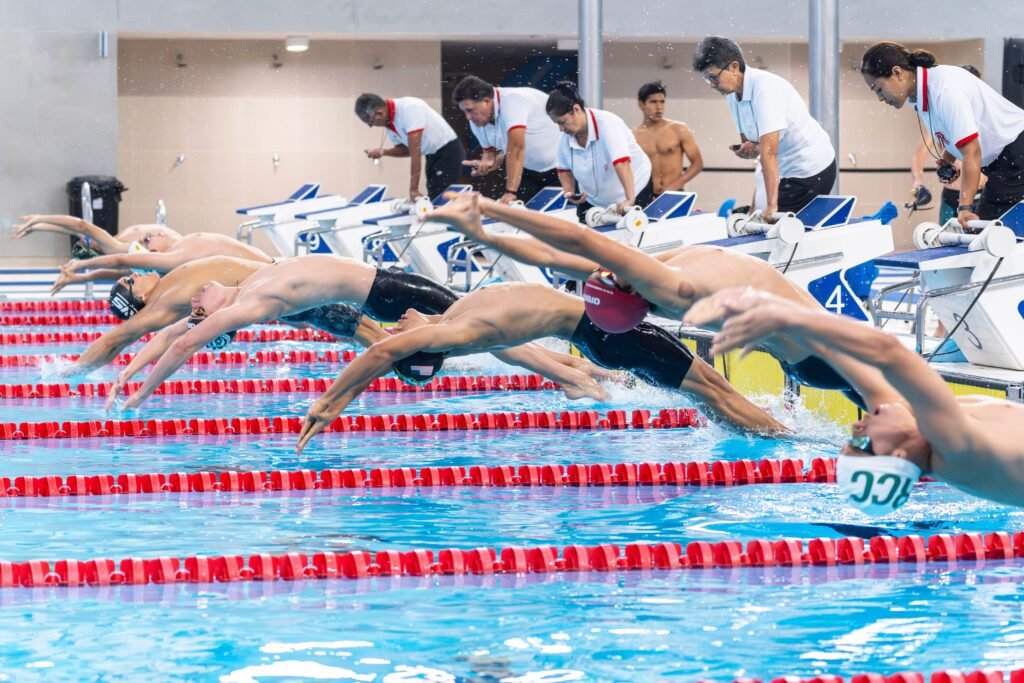
The World Aquatics Swimming Championships 2026 will bring elite short-course racing to Beijing from December 1 to 6. More than 1,000 swimmers from over 200 countries are expected to compete across six days at the Beijing National Aquatics Centre, better known as the Water Cube.
The championships will be the 18th edition of the short-course event. Beijing will host the competition as part of a major return to China for World Aquatics. The venue also carries Olympic history, having hosted swimming at Beijing 2008 and later curling during Beijing 2022.
Key Highlights & Historical Moments
Short-course swimming places unusual demands on elite athletes. The 25-meter pool creates more turns than a long-course race. As a result, underwater speed, reaction time, and efficient wall work can decide medals.
The 2026 championships also arrive after a record-setting 2024 edition in Budapest. That meet produced 30 world records, along with 13 world junior records, 46 championship records, and 63 continental records. A total of 985 swimmers from 195 countries competed in 2024.
Several storylines will shape the Beijing edition:
- Beijing returns to the global swimming spotlight: China will host the short-course championships for the third time after Shanghai 2006 and Hangzhou 2018.
- The Water Cube becomes the main stage: The Beijing National Aquatics Centre will host six days of racing.
- Mixed relays remain part of the program: Both mixed freestyle and mixed medley relays feature in the schedule.
- More finalists may get an opportunity: World Aquatics plans to trial 10-lane semi-finals and finals in selected events.
The record book will be under pressure again. However, the shorter format often rewards swimmers who can maintain speed through repeated turns.
World Aquatics Swimming Competition Analysis & Key Insights
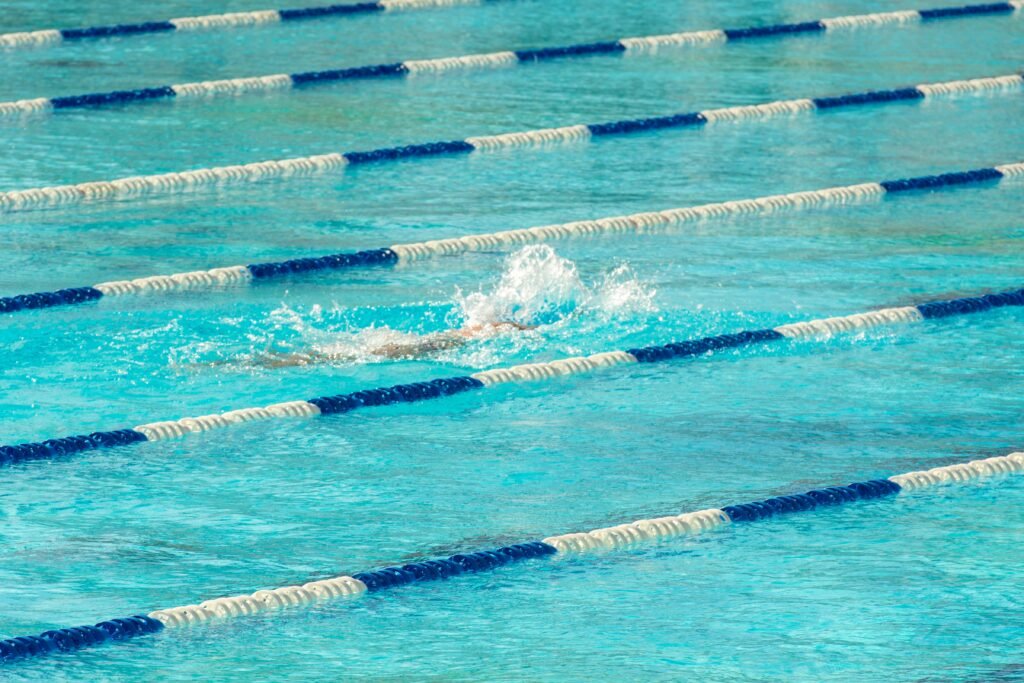
The biggest technical battle will come at the walls. In a 25-meter pool, swimmers turn more frequently than they do in Olympic long-course competition. Every approach, flip, push-off, and underwater phase therefore carries added weight.
Sprint events should be especially sensitive to small technical differences. A clean start can create an early advantage, while a weak turn can erase it within seconds. Meanwhile, middle-distance swimmers must balance pace with efficient underwater work.
The schedule also creates an important test of recovery. Athletes competing in several individual events may face heats, semi-finals, finals, and relay duties within a short period. Therefore, race management will matter almost as much as raw speed.
Expert Take / Analyst Insight
The key question in Beijing will not simply be who owns the fastest entry time. Short-course racing rewards complete execution. Swimmers who combine strong starts, fast turns, controlled breathing, and efficient underwater phases should have the best chance of converting qualifying form into medals.
The planned expansion to 10 lanes in selected later rounds could also change race dynamics by giving more swimmers access to championship finals.
Statistical Breakdown & Key Figures
The confirmed numbers underline the scale of the championships:
- Dates: December 1–6, 2026.
- Host city: Beijing, China.
- Venue: Beijing National Aquatics Centre, known as the Water Cube.
- Expected athletes: More than 1,000.
- Expected countries: More than 200.
- Competition length: Six days.
- Heats: Scheduled to begin at 10:00 local time.
- Evening sessions: Scheduled for 19:00, with the final evening beginning at 18:00.
- 2024 benchmark: 30 world records were set in Budapest.
The 2026 entry list and final medal standings are not yet available because the championships are scheduled for December.
What Lies Ahead
Beijing will provide an important late-season test for elite swimmers. The December timing means athletes must manage form after a long international calendar.
For emerging swimmers, the championships offer a chance to measure themselves against established names. Established medal contenders, meanwhile, will need to balance performance with recovery.
World Aquatics has already published the full competition schedule. Qualification information and athlete preparation details are also available through the official competition resources.
More importantly, Beijing could shape the early narrative of the next short-course cycle. Strong performances may establish new contenders before the next major international championships.
Frequently Asked Questions
Q1: When and where are the World Aquatics Swimming Championships 2026?
The championships will take place from December 1 to 6, 2026, at the Beijing National Aquatics Centre in Beijing, China.
Q2: Who are the main swimmers to watch?
The final 2026 entry list has not yet been confirmed. However, athletes who excelled at the 2024 championships will attract attention as preparations continue.
Q3: What makes short-course swimming different?
Races take place in a 25-meter pool, so swimmers complete more turns. Therefore, starts, underwater phases, wall speed, and technical efficiency become especially important.
Q4: How many athletes and countries are expected?
World Aquatics expects more than 1,000 world-class athletes from over 200 countries to compete during the six-day championships.
Q5: When is the next major swimming competition?
The Beijing championships will be followed by the wider international swimming calendar in 2027. World Aquatics has also confirmed the 2027 World Aquatics Championships in Budapest.