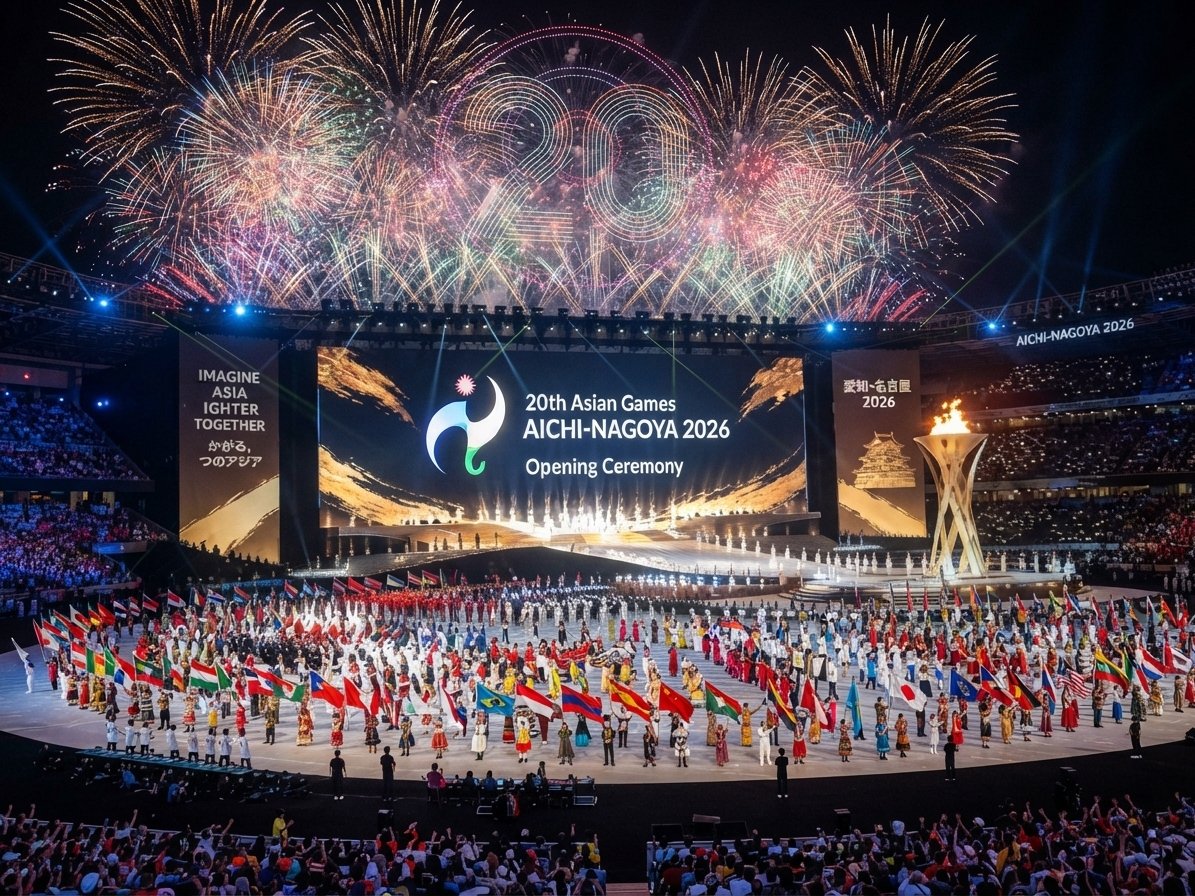
The Asian Games 2026 ended on October 4 in Aichi-Nagoya, Japan, after 16 days of competition. Athletes from across Asia competed in 43 sports and 469 gold-medal events. They battled for medals, records, and national pride throughout the Games.
China finished at the top of the final medal table with 169 gold medals and 341 medals overall. Meanwhile, host nation Japan finished second with 83 gold medals and 269 medals. South Korea took third place with 39 gold medals and 150 medals in total. India finished fourth with 85 medals, including 21 gold medals. Uzbekistan completed the top five. As a result, the final medal table showed the continued strength of several major sporting nations across Asia.
Pakistan finished its campaign with 10 medals, including two silver and eight bronze. Although Pakistan did not win a gold medal, its athletes produced several notable performances. In particular, the men’s cricket team won a silver medal after losing the final to India. In addition, Pakistan earned medals in sports such as squash and athletics. Overall, the country’s 10-medal haul provided several positive moments and gave its athletes valuable experience at one of Asia’s biggest sporting events.
China Tops the Asian Games 2026 Medal Table
China once again demonstrated its strength across a wide range of sports. The country finished the Asian Games with 169 gold, 89 silver, and 83 bronze medals, giving it a total of 341 medals.
This was China’s best medal haul at an Asian Games held outside the country. Its 169 gold medals placed it comfortably ahead of host nation Japan. China’s performance was built on strong results in swimming, athletics, shooting, gymnastics, combat sports, and several other disciplines.
One of the standout stories from the Chinese team was 13-year-old swimmer Yu Zidi, who won three gold medals and was named the female MVP of the Games. Teammate Zhang Zhanshuo also enjoyed a remarkable campaign, collecting seven gold medals. Their performances highlighted the depth of China’s next generation of athletes.
China’s dominance was not limited to one sport. Its athletes repeatedly reached medal events and converted those opportunities into gold medals. This consistency allowed the country to maintain a large advantage over Japan throughout the competition.
Japan Produces a Historic Home Performance
Japan finished second overall with 83 gold, 95 silver, and 91 bronze medals, giving the host nation 269 medals.
The Japanese team had particular motivation to perform well in front of a home audience. Its 83 gold medals represented a record for Japan at an Asian Games, surpassing its previous best total of gold medals at Hiroshima 1994. (Reuters)
Japan’s overall medal count also showed the country’s strength beyond gold-medal events. The hosts won 95 silver and 91 bronze medals, meaning Japanese athletes regularly reached the podium across different disciplines.
The home games also produced individual highlights. Japanese swimmer Shin Ohashi broke a world record in the 200-meter breaststroke, providing one of the major performances of the competition.
South Korea Finishes Third
South Korea secured third position with 39 gold, 43 silver, and 68 bronze medals, for a total of 150 medals.
The Korean team remained one of the strongest delegations throughout the Games. Its medal success came across traditional Asian Games sports as well as events where competition has become increasingly international.
Although South Korea finished well behind China and Japan in gold medals, its 150-medal total placed it comfortably in third position.
India Finishes Fourth With 85 Medals
India ended the Asian Games in fourth place, winning 21 gold, 27 silver, and 37 bronze medals, for a total of 85 medals. This was the same overall position India achieved at the previous Asian Games. (NDTV Sports)
India’s campaign improved significantly during the second half of the Games. After a relatively slow start in some events, Indian athletes produced a strong run of medal-winning performances in boxing, archery, wrestling, hockey, and other disciplines.
Athletics was one of India’s important medal contributors, while several individual athletes also produced strong performances in combat sports and precision events.
India’s final gold medal count of 21 placed it level with Uzbekistan in gold medals, but India finished above Uzbekistan because it had a higher overall medal total. Uzbekistan ended with 21 gold, 25 silver, and 24 bronze, giving it 70 medals. (Dawn)
Iran and Thailand Complete the Top Seven.
Iran finished sixth with 19 gold, 18 silver, and 15 bronze medals, for a total of 52.
Thailand also collected 52 medals but finished seventh because it had fewer gold medals. Thailand won 18 gold, 13 silver, and 21 bronze medals.
These results demonstrated the competitiveness of Asian sport beyond the continent’s traditional medal powers. Both countries produced strong performances in combat sports, athletics, and other disciplines.
Kazakhstan Wins 84 Medals
Kazakhstan finished eighth with an interesting medal distribution. The country won 12 gold, 24 silver, and 48 bronze medals, producing 84 medals overall.
Although Kazakhstan won considerably fewer gold medals than India, its large number of bronze medals helped it finish with an impressive overall haul.
Hong Kong, China, followed in ninth place with 11 gold, 19 silver, and 24 bronze medals, giving it 54 medals. Bahrain completed the top ten with 11 gold, five silver, and six bronze medals.
Asian Games 2026 Final Medal Table
The final standings showed a clear gap between the leading nations and the rest of the field.
| Rank | Country | Gold | Silver | Bronze | Total |
|---|---|---|---|---|---|
| 1 | China | 169 | 89 | 83 | 341 |
| 2 | Japan | 83 | 95 | 91 | 269 |
| 3 | South Korea | 39 | 43 | 68 | 150 |
| 4 | India | 21 | 27 | 37 | 85 |
| 5 | Uzbekistan | 21 | 25 | 24 | 70 |
| 6 | Iran | 19 | 18 | 15 | 52 |
| 7 | Thailand | 18 | 13 | 21 | 52 |
| 8 | Kazakhstan | 12 | 24 | 48 | 84 |
| 9 | Hong Kong, China | 11 | 19 | 24 | 54 |
| 10 | Bahrain | 11 | 5 | 6 | 22 |
| 11 | Malaysia | 9 | 7 | 16 | 32 |
| 12 | North Korea | 7 | 13 | 9 | 29 |
| 13 | UAE | 7 | 4 | 1 | 12 |
| 14 | Chinese Taipei | 5 | 17 | 33 | 55 |
| 15 | Indonesia | 5 | 11 | 23 | 39 |
| 16 | Qatar | 5 | 6 | 5 | 16 |
| 17 | Philippines | 4 | 9 | 16 | 29 |
| 18 | Kuwait | 4 | 1 | 4 | 9 |
| 19 | Vietnam | 3 | 3 | 19 | 25 |
| 20 | Saudi Arabia | 3 | 2 | 9 | 14 |
| 21 | Singapore | 2 | 9 | 7 | 18 |
| 22 | Tajikistan | 2 | 5 | 9 | 16 |
| 23 | Jordan | 2 | 3 | 6 | 11 |
| 24 | Myanmar | 2 | 1 | 2 | 5 |
| 25 | Macau, China | 1 | 4 | 1 | 6 |
| 26 | Kyrgyzstan | 1 | 3 | 10 | 14 |
| 27 | Mongolia | 1 | 1 | 13 | 15 |
| 28 | Sri Lanka | 1 | 1 | 1 | 3 |
| 29 | Pakistan | 0 | 2 | 8 | 10 |
| 30 | Iraq | 0 | 2 | 3 | 5 |
The final medal table is based on the completed Aichi-Nagoya 2026 results. (Dawn)
Pakistan’s Asian Games 2026 Medal Performance
Pakistan finished 29th in the final medal standings with 10 medals.
The country’s final total was
- Gold: 0
- Silver: 2
- Bronze: 8
- Total: 10
Pakistan’s campaign therefore did not produce a gold medal, but the 10-medal haul still gave the country several important podium finishes.
One of Pakistan’s most notable results came in men’s squash. Pakistan won the silver medal in the men’s team event after losing the final to Malaysia. The result added another important podium finish for Pakistani squash at the Asian Games. (The News)
Pakistan’s other major silver medal came in men’s cricket.
Pakistan Wins Silver in Men’s Cricket
Pakistan reached the men’s cricket final and faced arch-rivals India for the gold medal.
India scored 211 for six after batting first. Abhishek Sharma produced an explosive 61 from 28 balls, while Tilak Varma remained unbeaten on 51 from 22 deliveries.
Pakistan’s chase began badly, but Hasan Nawaz produced one of the most memorable individual performances of the Pakistani campaign. He scored 96 from 51 balls, including seven sixes and five fours. Saim Ayub contributed 29, and the pair added 87 runs for the fourth wicket.
Pakistan eventually finished on 192 for six, losing by 19 runs and taking the silver medal. (PCB)
The result meant India retained the Asian Games men’s cricket gold, while Pakistan had to settle for silver.
Hasan Nawaz’s 96 was particularly significant because he was dismissed from the final ball of the innings, leaving him only four runs short of a century. His innings kept Pakistan in contention almost until the final delivery.
Sri Lanka won the bronze medal in men’s cricket after defeating Bangladesh in the third-place playoff. (Dawn)
India’s Cricket Gold Adds to Its Medal Haul
The cricket final was one of the most closely followed events of the Games because it brought India and Pakistan together in a gold-medal match.
India’s 19-run victory gave the country another gold medal and helped it secure fourth position in the final standings.
The final also provided a dramatic finish to Pakistan’s team campaign. Pakistan had reached the gold-medal match with the opportunity to win its first Asian Games cricket gold, but India’s stronger total proved decisive.
Other Important Medal Performances
The Asian Games are not decided by the biggest teams alone. Several smaller nations produced historic performances during the 2026 competition.
Thailand’s Puripol Boonson was named the male MVP after winning both the 100-meter and 200-meter sprint titles. His performances made him one of the standout track athletes of the Games. (Reuters)
China’s Yu Zidi became another major name after winning three swimming gold medals at only 13 years of age. Her performances demonstrated the emergence of a new generation of Asian sporting talent.
China’s Zhang Zhanshuo was another exceptional medal achiever, collecting seven gold medals during the Games. (Reuters)
New Sports Add More Variety
Aichi-Nagoya 2026 also expanded the Asian Games program.
Padel, surfing, mixed martial arts and teqball were among the sports making their Asian Games debut. The program featured 43 sports and 469 gold-medal events, making the competition one of the largest editions of the Asian Games. (Reuters)
The addition of new sports provided more opportunities for athletes from different sporting backgrounds. It also reflected the changing nature of Asian sport and the growing popularity of newer disciplines.
A Historic Asian Games for China and Japan
The final medal table tells two major stories.
For China, the Games represented another demonstration of its enormous sporting depth. Winning 169 gold medals and 341 medals overall placed China far ahead of every other delegation.
For Japan, hosting the Games provided an opportunity to produce a major home performance. The country won 83 gold medals and 269 medals overall, setting a new benchmark for its Asian Games performance. (Reuters)
The contrast between the two countries also shows the scale of the competition. China dominated the gold-medal race, while Japan collected more silver medals than China and produced a very strong overall result.
What the Asian Games 2026 Will Be Remembered For
The Aichi-Nagoya Asian Games will be remembered for several major sporting stories.
China’s medal dominance was one of the biggest. The emergence of teenage stars such as Yu Zidi was another. Japan’s record home performance also stands out.
For India, finishing fourth with 85 medals represented another strong overall campaign. Its late surge and 21 gold medals ensured that the country remained among Asia’s leading sporting nations. (NDTV Sports)
For Pakistan, the final result was more modest, but the 10 medals still provided important moments. The men’s cricket team reached the final and secured silver, while squash contributed another major silver-medal result.
The final day also brought the closing ceremony, officially ending 16 days of competition. The Games were then handed over to the next host, Doha, Qatar, which is scheduled to stage the 2030 Asian Games. (Olympics)
Asian Games 2026 Final Takeaway
The Asian Games 2026 ended with China firmly at the top of the medal table, Japan enjoying a record performance on home soil and India securing fourth position with 85 medals.
China’s 169 gold medals were the defining figure of the competition, while Japan’s 269 total medals represented an exceptional home campaign. South Korea completed the top three, followed by India and Uzbekistan.
Pakistan finished with 10 medals, including two silver and eight bronze. The men’s cricket team’s silver medal was one of the country’s biggest moments, particularly after Hasan Nawaz’s outstanding 96 in the final against India. (PCB)
With the closing ceremony now complete, the sporting focus moves toward the next edition. Doha, Qatar is set to host the 2030 Asian Games, continuing the tradition of bringing Asia’s leading athletes together for one of the continent’s biggest multi-sport events. (Reuters)
FAQs About Asian Games 2026
1. Who topped the Asian Games 2026 medal table?
China topped the final medal table with 169 gold, 89 silver and 83 bronze medals, for a total of 341 medals. (Dawn)
2. How many medals did India win at the Asian Games 2026?
India won 85 medals, including 21 gold, 27 silver and 37 bronze medals. India finished fourth overall. (NDTV Sports)
3. How many medals did Pakistan win at the Asian Games 2026?
Pakistan won 10 medals: two silver and eight bronze. It finished 29th in the final medal table. (Dawn)
4. Who won the men’s cricket gold medal?
India won the men’s cricket gold medal after defeating Pakistan by 19 runs in the final. Pakistan won silver, while Sri Lanka took bronze. (PCB)
5. Where will the next Asian Games be held?
The next Asian Games are scheduled to be held in Doha, Qatar, in 2030. (Reuters)